
Every venue that adds a drift kart to its fleet learns the same lesson inside a month: the kart slides beautifully, riders queue for it, and the rear tires quietly disappear. Riders love it. Marshals do not. And whoever orders consumables starts asking whether the whole idea pays for itself.
Most of the time it does. The problem is rarely the kart. It is the shortcut operators take to make the rear step out quickly, and that shortcut shows up later, itemized, on a tire invoice.
What a Drift Kart Needs From the Rear Axle
A kart drifts when the rear tires lose grip before the front tires do. That is the entire mechanism. The gap between where a tire points and where it actually travels is the slip angle, and past a few degrees the tire is sliding rather than rolling. Slip angle builds fast once the rear of the kart is unloaded, which is exactly why lifting off mid-corner starts a slide so reliably.
On a rental chassis the rear axle is normally solid, so both rear wheels turn at the same speed. The axle cannot let the inside wheel follow a shorter path. For the kart to rotate, the rear pair has to break traction together, at a speed your riders can control and repeat.
There are two ways to get there. You can remove grip mechanically, with a hard ring or sleeve on the rear wheels. Or you can tune grip, with tire choice, pressure, weight distribution and throttle response. The first installs in an afternoon. The second is far cheaper to run.
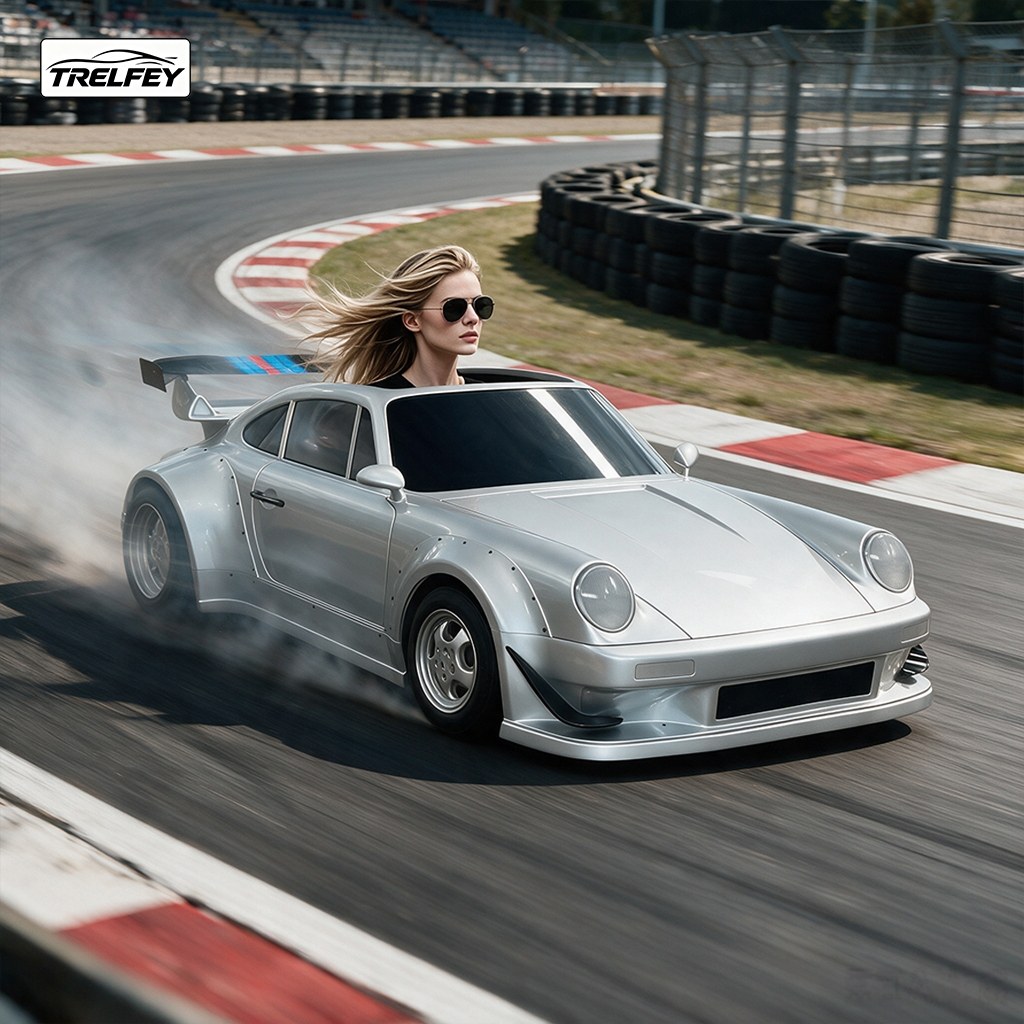
Why a Drift Ring Is the Most Expensive Cheap Fix You Can Fit
A drift ring works by sliding on the surface instead of gripping it. That is what a tire does anyway, except a ring does it through a hard, narrow contact patch. Hard materials do not wear evenly. Heat concentrates at the edges, the surface chunks, and the ring becomes a second consumable sitting on top of the first.
The load does not stop at the wheel either. A rear that spins freely under power makes the motor and controller work through every one of those revolutions. On a 2500 W mid-mounted motor pushing a 300 kg (661 lb) load, a rear that never hooks up runs hotter, session after session.
Rings still have a place. Low-speed demos, photo sessions, a nervous beginner who needs the kart to rotate at walking pace. Fit them for those jobs and book them as a consumable line, not a permanent modification.
| Approach | How it creates slip | Rear tire life | Skill transfer | Best for |
|---|---|---|---|---|
| Drift ring or hard sleeve | Removes grip at the wheel | Lowest: ring and tire both wear | Low, the kart slides regardless of driver | Demos, photos, fixed low-speed courses |
| Low-grip rear tire | Cuts grip at the contact patch | Medium and predictable | High, the driver must manage throttle | Rental drift sessions |
| Throttle mapping | Softens the first torque hit | Highest | Highest | Fleets with mixed skill levels |
| Rear brake bias | Lets the driver break traction on entry | Medium, hard on pads | High, but needs coaching | Instructor-led sessions only |
The Setup That Slides Without Shredding Rubber
Six adjustments for a drift kart, in this order. None of them need parts, and all of them are reversible in an afternoon.
- Rear pressure before rear compound. Raise rear pressure in steps of 0.05 bar (0.7 psi) until the rear steps out at the speed your riders actually drive. Most venues over-tire the rear and then wonder why nothing slides.
- Keep the front gripping. A kart that pushes wide is a slow kart with a tire bill. If the front washes out on entry, you have gone too far on rear pressure or too soft at the front.
- Tune torque ramp, not top speed. A soft first second of throttle gives riders the slide without the snap. Top speed is what frightens beginners. Torque delivery is what teaches them.
- Move weight back in small amounts. Seat position and ballast change how quickly the rear breaks away. Log every change, because a fleet drifts out of setup one adjustment at a time.
- Match the rear pair. On a solid axle, a mismatched left and right turns every corner into a handling complaint.
- Keep the surface honest. Dust and rubber build-up change grip hour by hour. Sweep before the session, not after the complaint.
Change one variable per session and write down what you changed. Two weeks of notes will outperform any setup sheet someone emails you.
Tire Pressure and Rotation Decide Your Tire Bill
Rear tire wear on a drift kart is mostly a rotation problem wearing a pressure problem’s clothes. Circuits run one direction, so the loaded rear tire works harder all day and wears a shoulder long before the other side does.
Rotate on a fixed count rather than on appearance. Swap left to right at every service interval, inspect the shoulder and sidewall at the same time, and retire a tire at its wear indicator instead of at the first visible cord. The basic inspection routine is well documented by the U.S. Tire Manufacturers Association, and it transfers directly to small karts.
Then measure the result instead of arguing about it. Cost per rider-session equals the cost of a rear set divided by the sessions that set survives, divided again by riders per session. Run that number for three weekends and you will know whether your drift program is a marketing asset or a subsidy.
Pressure also drifts with temperature. A kart that leaves the workshop at 1.0 bar cold will not be at 1.0 bar after twenty laps on a warm afternoon. Check rears hot, once, and note the difference. That single habit prevents most mid-session handling complaints.
How to Teach Drift in Three Sessions
Most drift kart rental programs fail at instruction, not equipment. Riders are handed a kart that slides and no sequence to follow, so they either spin or crawl. Three short sessions fix that.
Session one: figure-eight at walking pace
No throttle work at all. Riders trace a figure eight slowly and feel where the kart wants to rotate. The goal is steering feel and body position, not smoke. Fifteen minutes is enough, and it removes the panic that causes most spins later.
Session two: the throttle-lift transfer
One corner, one instruction: lift, then steer. Riders learn that the rear breaks away when weight moves forward, not when the wheel is yanked. This is where a soft torque ramp pays for itself, because the slide arrives at a speed a beginner can correct.
Session three: countersteer timing
Now the exit. Riders hold a slide for two seconds, catch it, and drive out. Count the seconds out loud from the marshal post. Riders who can hold a slide for a measured count stop treating the throttle as an on-off switch, and rear tire wear follows their smoothness.
Drift Karts and Race Karts Do Different Jobs
A drift session and a lap-time session stress completely different parts of the kart. Racing rewards grip, brakes and a stiff chassis. Drifting rewards torque control, rear tire consistency and cheap bodywork. Mixing both jobs on one fleet means compromising both.
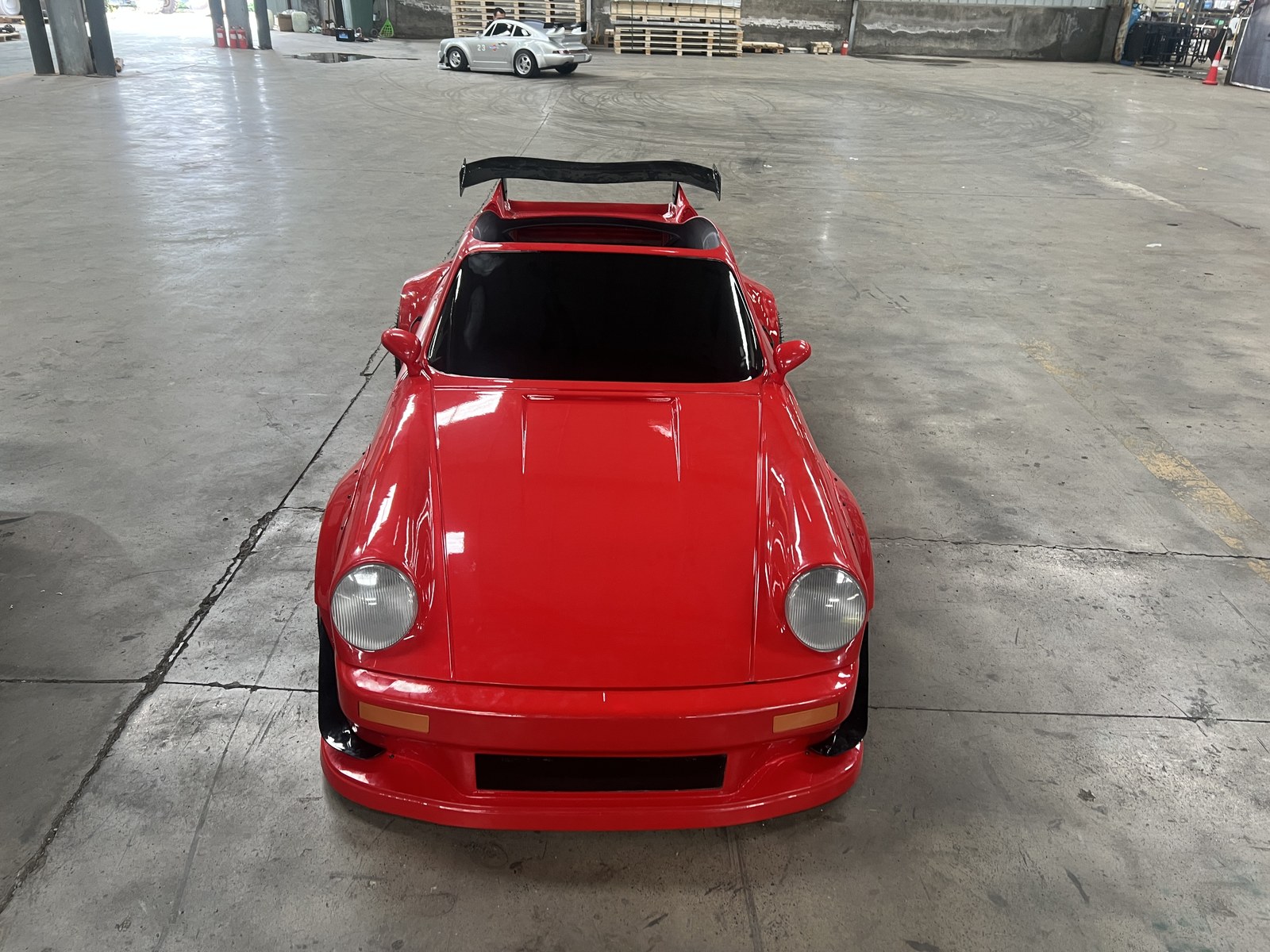
The wide-body and cabrio bodies share one drive package: a 2500 W mid-mounted motor, a 72 V 50 Ah pack, 80 km/h (50 mph) top speed, roughly 60 km (37 mi) of range, and a 300 kg (661 lb) load rating. The GT3-style chassis is the entry point for younger or lighter drivers, at 60 km/h (37 mph), 220 kg (485 lb) unladen and the same 300 kg (661 lb) load rating. All of them are built for private track use, not public roads.
For a mixed fleet, run the wide-body drift kart on the slide sessions and keep the GT3-style kart on junior coaching and lap timing. If you are still sizing the venue, the fleet and revenue planning notes under business solutions are a better starting point than a tire order.
Five Checks Before You Buy a Drift Kart
- Rear hub and axle design. Ask how the rear wheels mount and how quickly a hub can be replaced. Consumable access decides your weekend downtime.
- Thermal headroom in the drive. A motor rated for continuous work at your session length, not for a peak number on a spec sheet.
- One tire size across the fleet. Standardized rears mean one spare set covers three karts, and rotation stays simple.
- Body panel fixings. Fibreglass and ABS panels get touched by barriers. Clips and bolts should come off in minutes, not with a cutting disc.
- Parts commonality. Bearings, brake pads and controllers shared across models keep a mixed fleet serviceable with one shelf.
If you want a body style that matches your venue instead of a catalog default, customisation covers colors and trim before the build starts, which is far cheaper than repainting a delivered kart.
What Good Looks Like After 90 Days
A healthy drift kart program has three signatures. Rear tires wear evenly across the pair, riders can hold a slide for a counted two seconds, and your cost per rider-session is flat or falling while bookings grow. If any of those three is missing, the fix is almost always setup or coaching, not a new kart.
The sector keeps expanding because the product works: indoor and family entertainment venues continue to add driving experiences as anchor attractions, a trend the global attractions industry association tracks across markets every year. Drift is one of the cheapest ways to make a kart feel fast at low speed, which is why it belongs in the plan. It just should not be the line item that quietly eats your margin.
Start with pressure, torque ramp and a rotation log. Give it three weekends before you change anything else, and let the tire bill tell you whether the setup is working.