
Peak Saturday breaks in the same place every week. Twelve karts leave the pit, six come back on the red light, and the queue at the desk grows while a marshal hunts for a free charger. A planned electric go-kart battery swap turns that gap into a two-minute stop instead of a forty-minute wait, and it is the cheapest throughput upgrade most rental venues never bother to price out.
What follows is the math, the pack count, the procedure your marshals can run in gloves, and the charging-room details that keep insurers calm. Every figure is a planning assumption you can re-run against your own session length and fleet size.
Why Electric Go-Kart Battery Swap Beats Overnight Charging
Overnight charging assumes one kart, one pack, one day of work. That assumption holds on a quiet Wednesday. It collapses the moment a venue sells back-to-back blocks, because a pack sitting at partial charge at two in the afternoon either gets changed or costs you the next session.
Charging in place carries a second cost that rarely reaches a spreadsheet: floor. Every kart tied to a cable is a kart occupying pit space that could be holding a paying queue. Run an electric go-kart battery swap instead and the kart returns to the circuit while the depleted pack recharges on a rack away from the track. The charge cycle and the revenue cycle stop competing for the same hour.
Electric drivetrains make the practice practical because there is no fuel system to disturb and no exhaust to extract. For a plain-language walkthrough of what sits inside an electric drivetrain, the U.S. Department of Energy’s Alternative Fuels Data Center is a clean reference. The components are the same ones you lift out, scaled down.
Run the Throughput Math Before You Buy Spare Packs
Packs are the most expensive consumable in an electric fleet, and guessing the count is how venues end up with a shelf of idle batteries or a queue at three in the afternoon. An electric go-kart battery swap plan lives or dies on that count, so start from the energy the fleet burns rather than the number of karts you own.
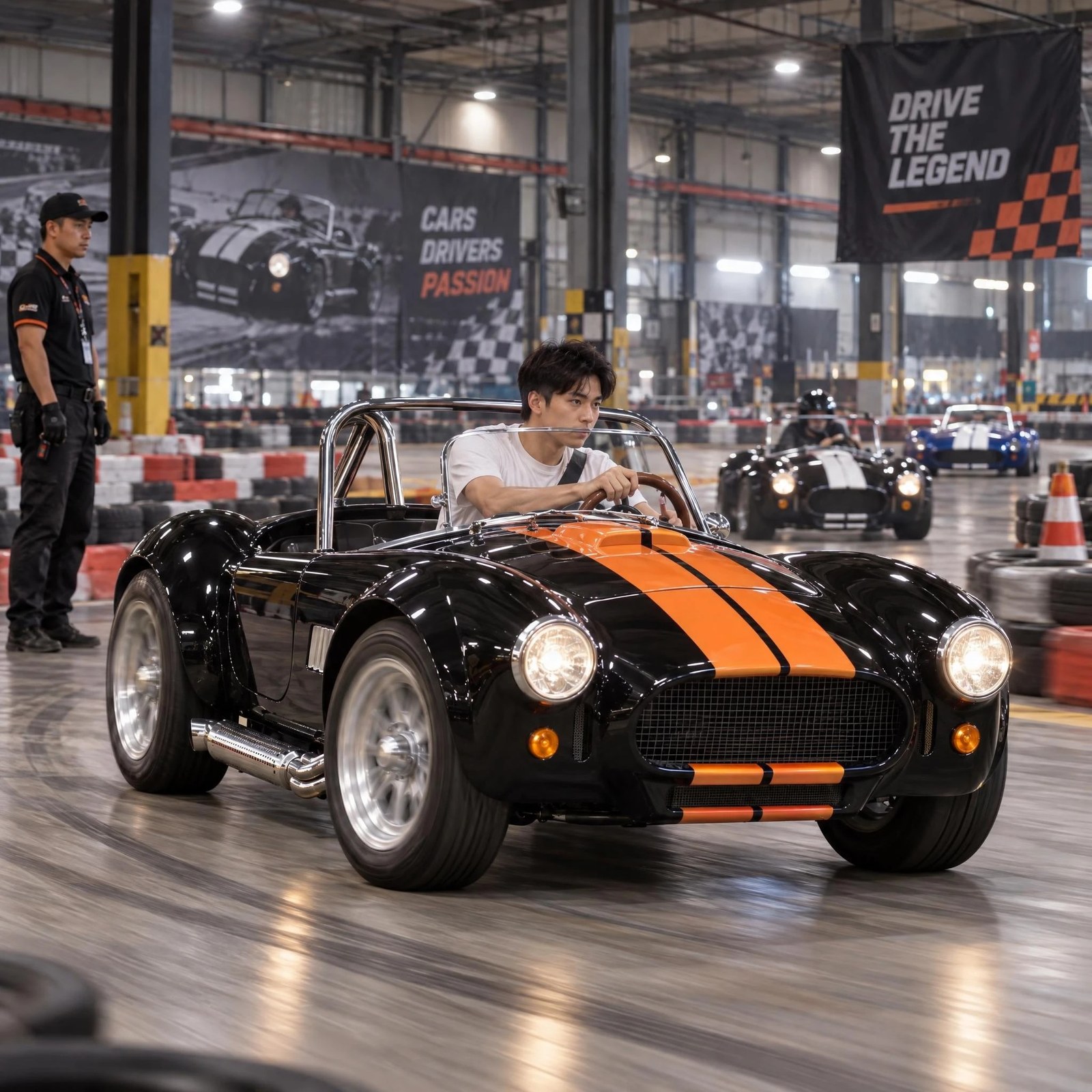
Our 964-style, wide-body and muscle-style rental karts all run a 72 V 50 Ah pack behind a 2500 W mid-mounted motor, rated at 80 km/h (50 mph), 60 km (37 mi) of range and a 300 kg (661 lb) load. That is 3.6 kWh nominal, which is the number that matters here. Rated range is a steady-speed figure; rental duty is the opposite of steady, so any electric go-kart battery swap plan discounts stated range before dividing it up.
Build it once, with the assumptions written down.
| Line | Value | Where it comes from |
|---|---|---|
| Pack capacity | 72 V × 50 Ah = 3.6 kWh | Nameplate |
| Rated range | 60 km (37 mi) | Manufacturer rating |
| Planning range | 27 km (17 mi) | Assumes 45% of rated range in stop-start rental duty |
| Session length | 8 minutes | Your own timing sheet |
| Average speed including pit lane | 25 km/h (15.5 mph) | Lap-time average, not top speed |
| Distance per session | 3.3 km (2.1 mi) | 8 minutes at 25 km/h |
| Sessions per pack | About 8 | 27 km ÷ 3.3 km |
| Peak-day demand, 12 karts | 144 sessions | 12 karts × 12 sessions |
| Pack-charges consumed | 18 | 144 sessions ÷ 8 |
| Packs per kart | 1.5 | 18 packs ÷ 12 karts |
The 45% figure is the only line you should treat as a guess. Log real pack voltage at the end of ten sessions and replace it with your own number inside a month.
How Many Spare Packs Does an Electric Go-Kart Battery Swap Actually Need?
The table lands on 1.5 packs per kart, which in practice means two packs for every three karts plus one buffer pack for the rack. Do not round that up to a full spare for each kart without checking the recharge window first.
Recharge time is the constraint nobody quotes. Time one pack from empty to full on your own charger, divide your operating day by that number, and you get the rotations available per pack. If a pack needs most of a working day to refill, you need the packs; if it refills over lunch, you need fewer and can spend the difference on tires. This is exactly the run-rate question our rental fleet planning work settles with venues before they commit to a pack count.
A family entertainment centre has a different curve from a race-night venue. Family blocks run shorter sessions with longer changeovers, so packs cycle less aggressively and 1.2 packs per kart often holds. League nights run longer stints with minimal breaks and burn through packs faster. Size the rack for the format you sell on your busiest night, and revisit the electric go-kart battery swap routine whenever that format changes.
Inside the Three-Minute Swap
A swap only saves time if the kart, the bench and the marshal are all designed for it. Treat the electric go-kart battery swap as a pit stop with a fixed sequence, and rehearse it until nobody has to think about the order.
Before the kart comes in
Charged packs sit on the bench in the orientation they will be fitted, connectors facing the marshal, with empty slots labelled. If a marshal has to search for a pack, the three-minute target is already gone.
The five-step sequence
- Kill and key out. Controller off, key removed and pocketed by the marshal, not left in the tray. This is the step that gets skipped when the queue is long, and it is the only step that can hurt someone.
- Release the retention. Latches or bolts, whichever the chassis uses, released by feel. Gloves stay on; a swap that needs bare hands will not survive a cold morning.
- Tray out, tray in. Two handlers, one pack, one direction of travel. A 72 V pack is not a one-person lift on a wet floor, and the connector should never carry the weight.
- Seat and torque. Pack fully seated before the retention closes, connector engaged last, torque checked by the same person every time.
- Power check and log. Controller on, voltage read, session number written on the board. The log is what turns your 45% assumption into a real number.
A bench that rehearses this sequence settles into a four-minute electric go-kart battery swap within a month; the quickest teams get under three with two handlers.
Set Up the Charging Room Like a Workshop
Most charging problems are layout problems. A room that was empty at commissioning fills up with boxes, spare bodywork and a mop bucket within six months, and the ventilation assumptions quietly stop being true. Wire the room for the electric go-kart battery swap you plan to run in year three, not the one you run in week one.
- Separation. Charging happens away from the track, behind a barrier, on a non-combustible floor, so a pack off an electric go-kart battery swap never sits next to the racing line.
- Air. Mechanical ventilation sized for the room, with the intake where fumes cannot pool. The charging-room rules written for electric industrial trucks are a useful benchmark, and OSHA’s powered industrial truck standard covers ventilation, fire protection and signage in plain language.
- Electrical. Dedicated circuits, RCD protection, no daisy-chained strips. The UK Health and Safety Executive sets out the portable-appliance and fixed-installation checks in language an insurer will accept.
- Water and spill kit. Eyewash within reach, a class-appropriate extinguisher, and a response procedure staff have actually practiced.
- Labelling. Every bay numbered, every pack tagged with an ID, so a weak pack gets traced instead of blamed on the track.
Battery Habits That Decide Pack Life
Two venues can buy identical packs and see completely different service lives. The difference is usually habit, not hardware.
Keep packs out of deep discharge. A pack that finishes the day near empty and sits there until morning ages faster than one that comes off the kart at 30% and goes straight onto the rack. Charge in the working band, store cool, and never park a pack on a concrete floor in a cold room overnight.
Rotate them. Numbered packs used in strict rotation wear at the same rate, so your range estimate stays predictable and no single kart quietly becomes the slow one at the back of the queue. Retire on evidence too: log voltage under load, not just voltage at rest, and pull a pack when it stops holding its share of a session. A disciplined electric go-kart battery swap routine makes that evidence easy to collect, because every change is already written down.

What to Ask a Supplier Before You Standardize
Standardizing on one pack format is the biggest decision in this whole exercise, because it locks your rack, your chargers and your spares to one supplier for years. One standard is also what makes an electric go-kart battery swap repeatable across a mixed fleet, so ask these five questions before the first purchase order, not after the third.
- Is the pack documented? Chemistry, configuration, BMS behaviour and the charging profile, on paper.
- What is the swap interface? Retention method, connector type, and whether it survives being opened hundreds of times a season.
- Can I buy packs without karts? A supplier who only sells complete units cannot support a rotation model.
- What compliance file comes with it? For machinery sold into the EU, ask for the 2006/42/EC documentation set and the declaration that goes with it.
- What is the spares path for three years? Packs, connectors, latches and controllers, with lead times in writing.
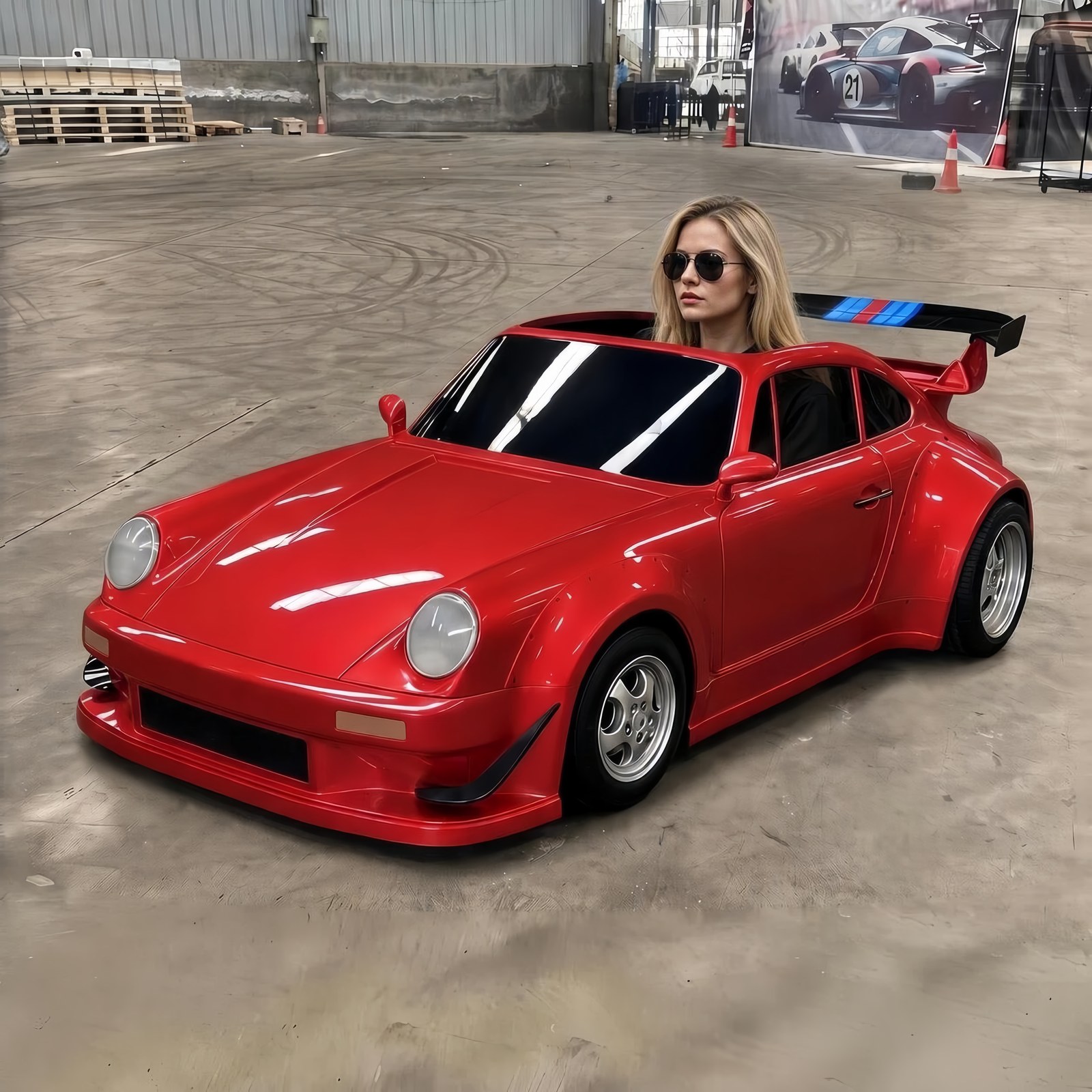
On our side, the 964-style cabrio and the GT3-style share a 72 V architecture, which means one rack and one charger family across a mixed fleet. The GT3-style runs a lighter 220 kg (485 lb) chassis at 60 km/h (37 mph) with the same 300 kg (661 lb) load rating, so it suits junior and family sessions without adding a second pack standard. Spares and pack documentation sit behind our service and support channel.
The Weekend Test
You do not need a new building to fix this. You need one kart, one spare pack and one stopwatch. Time an electric go-kart battery swap on a Saturday, with the queue watching, and you will know inside an hour whether your pit lane is a service lane or a charging queue.
Then re-run the table. If your pack count, your rack and your rotation all survive a real Saturday, the swap routine stops being an operational risk and becomes the reason you can sell one more block before close. These karts are built for venues, tracks and rental sites; they are not road vehicles, and nothing in this plan changes that.