Most indoor track owners can quote their lap record and their busiest Saturday. Very few can quote the carbon monoxide reading in their own pit lane at 7 p.m. Yet indoor go kart ventilation quietly sets three numbers you watch every week: how long staff stay, what parents write in reviews, and how much of each session’s margin the air handling system takes back.
This is not a compliance lecture. It is a cost walk-through: what petrol exhaust adds to a closed hall, how to size the airflow you actually need, and where an electric fleet changes the arithmetic for indoor go kart ventilation.
Why Indoor Go Kart Ventilation Is a Margin Problem
Indoor air problems begin with sources, not filters. The US Environmental Protection Agency is blunt about the order of operations. Sources that release gases or particles are the primary cause of indoor air quality problems. Inadequate ventilation then lets those emissions accumulate, because too little outdoor air arrives to dilute them.
Now picture your hall at peak. Eighteen petrol karts queue in the pit lane with engines running while the previous group clears the grid. That is eighteen small engines discharging exhaust into a fixed volume of air. The session lasts eight minutes. The pollution does not stop when the chequered flag drops.
That single detail explains most of what indoor go kart ventilation has to solve, and why fan size alone rarely fixes it.
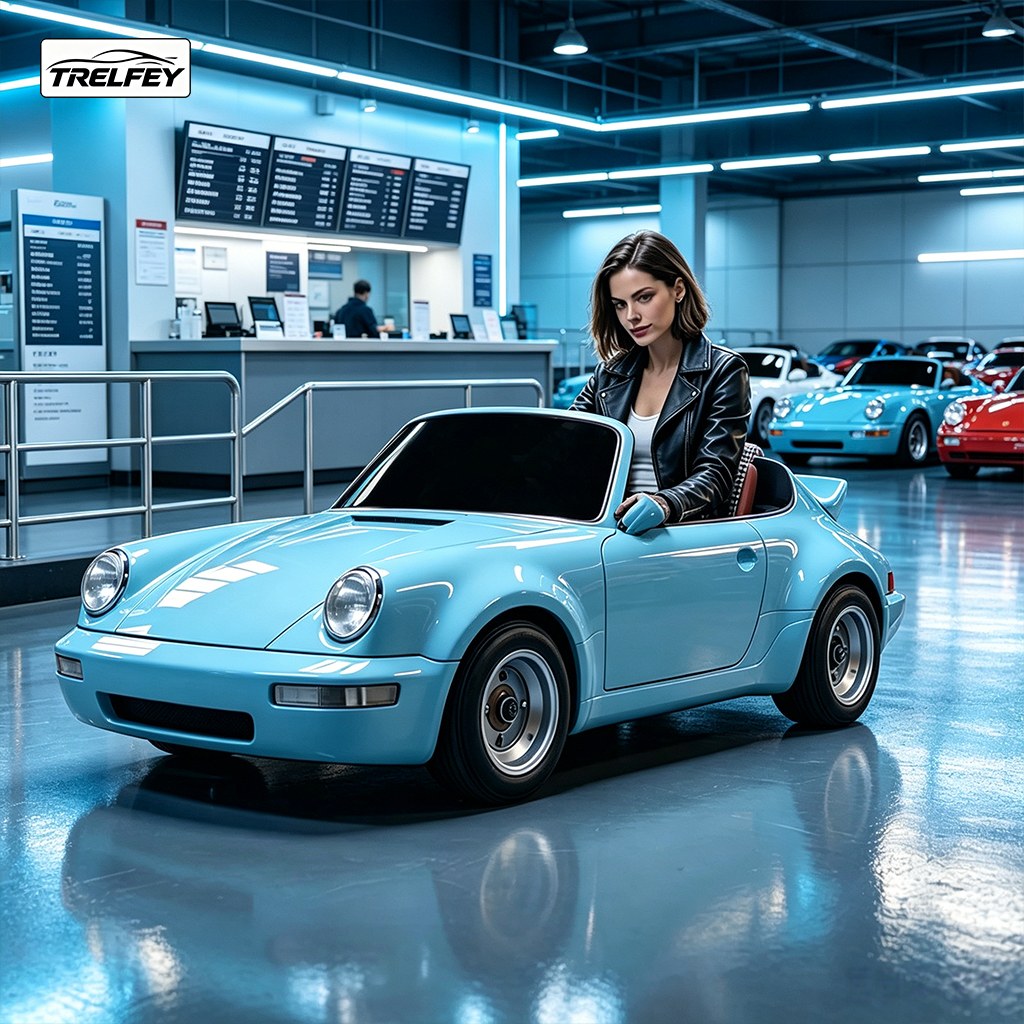
The commercial consequence is boring and expensive. Marshals who end every shift with headaches quit. Parents who notice a haze over the viewing rail do not book the birthday party again. Corporate organisers walk the space, ask what the extract rate is, and take the answer to the venue across town.
What Petrol Exhaust Actually Adds to Your Air
Carbon monoxide is the one to watch, because you cannot see it, taste it or smell it. The EPA describes carbon monoxide as an odorless, colorless and toxic gas, and lists gasoline-powered equipment and vehicle exhaust among its indoor sources.
The health ladder matters for staffing decisions. At low concentrations, carbon monoxide causes fatigue in healthy people and chest pain in people with heart disease. At moderate levels it produces angina, impaired vision and reduced brain function. Higher exposure brings headaches, dizziness, confusion and nausea, and at very high concentrations it kills.
Exposure limits show how little it takes. On the same EPA page, the OSHA permissible exposure limit is 50 ppm as an eight-hour time-weighted average, the NIOSH recommended exposure limit is 35 ppm, and the ACGIH threshold limit value is 25 ppm. A venue that has never measured anything is not managing this risk. It is hoping.
Carbon monoxide is not the whole load. Petrol engines also release nitrogen oxides, fine particulates and unburned hydrocarbons, and each one adds to the volume of air your system must move before the hall feels clean again. Until you measure it, indoor go kart ventilation is a guess with a smell attached.
Three Numbers That Size Indoor Go Kart Ventilation
You do not need an engineering degree to ask better questions of your contractor. You need three inputs, and one principle.
- Air exchange rate. The EPA defines it as the rate at which outdoor air replaces indoor air, and notes that low exchange rates let pollutant levels climb. Ask what your system delivers at full occupancy, not on a mild Tuesday.
- Simultaneous source count. Count karts on track, karts idling in the pit, and any engine running in a service bay. Peak source count matters far more than fleet size.
- Occupancy. Riders, spectators, party guests and staff breathe the same air. A mezzanine full of parents doubles the people without adding a single kart.
Then apply the principle the EPA keeps returning to: control the source first. A capture hood on the tailpipe in the pit lane removes exhaust before it mixes with hall air. Dilution is the second line of defence, never the first, and getting those three numbers right is what makes indoor go kart ventilation predictable.
Do Electric Karts Remove the Ventilation Problem?
They remove the combustion source, which is the expensive half. An electric kart produces no carbon monoxide, no nitrogen oxides and no exhaust to extract at the tailpipe. The pit lane stops being an emissions zone and becomes a parking bay.
Airflow still matters, just for different reasons. Chargers and battery packs release heat. Tire dust accumulates. Humidity climbs in a sealed hall and, as the EPA notes, high temperature and humidity can raise concentrations of some pollutants. Comfort ventilation keeps sessions pleasant and stops your extract bill from spiking in July.
Our 964-style electric convertible kart runs a 2500 W mid-drive motor on a 72 V 50 Ah pack. It reaches 80 km/h (50 mph) and covers 60 km (37 mi) per charge, with a 300 kg (661 lb) load rating. The GT3-style sprint chassis is the lower-speed option at 60 km/h (37 mph), 220 kg (485 lb) dry and the same 300 kg (661 lb) load. Neither needs a tailpipe extractor, which is the line item that usually surprises first-time buyers.
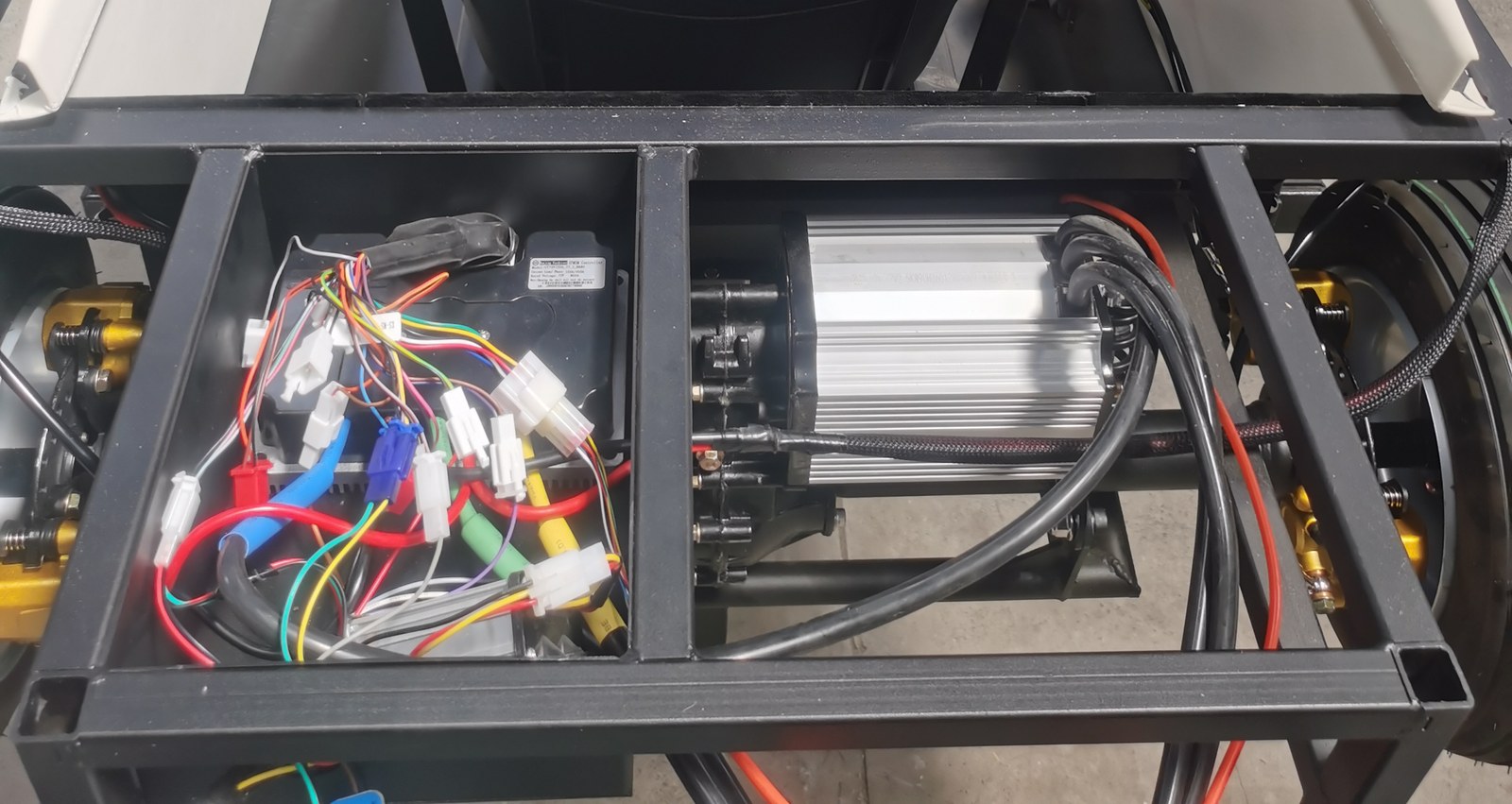
Charging deserves its own zone. Give it dedicated airflow, clear signage, a fire-rated surface and a written log. Never charge in the pit lane where riders walk, and never charge beside the spectator rail.
In practice, indoor go kart ventilation for an electric fleet is a cooling and comfort job, not an emissions job. That is a much cheaper specification to meet.
Noise Is the Second Bill Indoor Go Kart Ventilation Pays
Noise treatment and indoor go kart ventilation draw on the same capital budget, so plan them together. Noise is air quality you can hear. The WHO Environmental Noise Guidelines for the European Region treat leisure noise as an environmental health exposure and set recommended levels to protect health and wellbeing.
In a steel-and-concrete shed, petrol engines bounce off every hard surface. The hall becomes loud enough to shorten a marshal’s career and loud enough for the neighbouring unit to file a complaint. Acoustic absorption on ceiling and walls treats the symptom. Removing the engine treats the cause.
Electric karts are quieter at source, but they are not silent. Tire squeal, impact noise on barriers and the PA system all remain. Budget absorption anyway, and measure before and after so you know what you actually bought.
Eight Checks That Keep Indoor Go Kart Ventilation Honest
None of this needs a capital project to start. Run these in the first week.
- Place carbon monoxide monitors at breathing height in the pit lane, on the grid and at the spectator rail.
- Log a reading at the start and end of every session, and keep the log for a year.
- Write a trigger rule: if a reading passes your target, karts stop until extraction catches up.
- Fit tailpipe capture in the pit lane before you spend money on bigger fans.
- Ban idling. Karts switch off in the queue, with no exceptions for regulars.
- Service HVAC filters and check belt tension on a fixed calendar, not when someone complains.
- Keep charging in a dedicated zone, never in the pit lane or beside the viewing rail.
- Give staff a symptom log and the authority to stop a session.
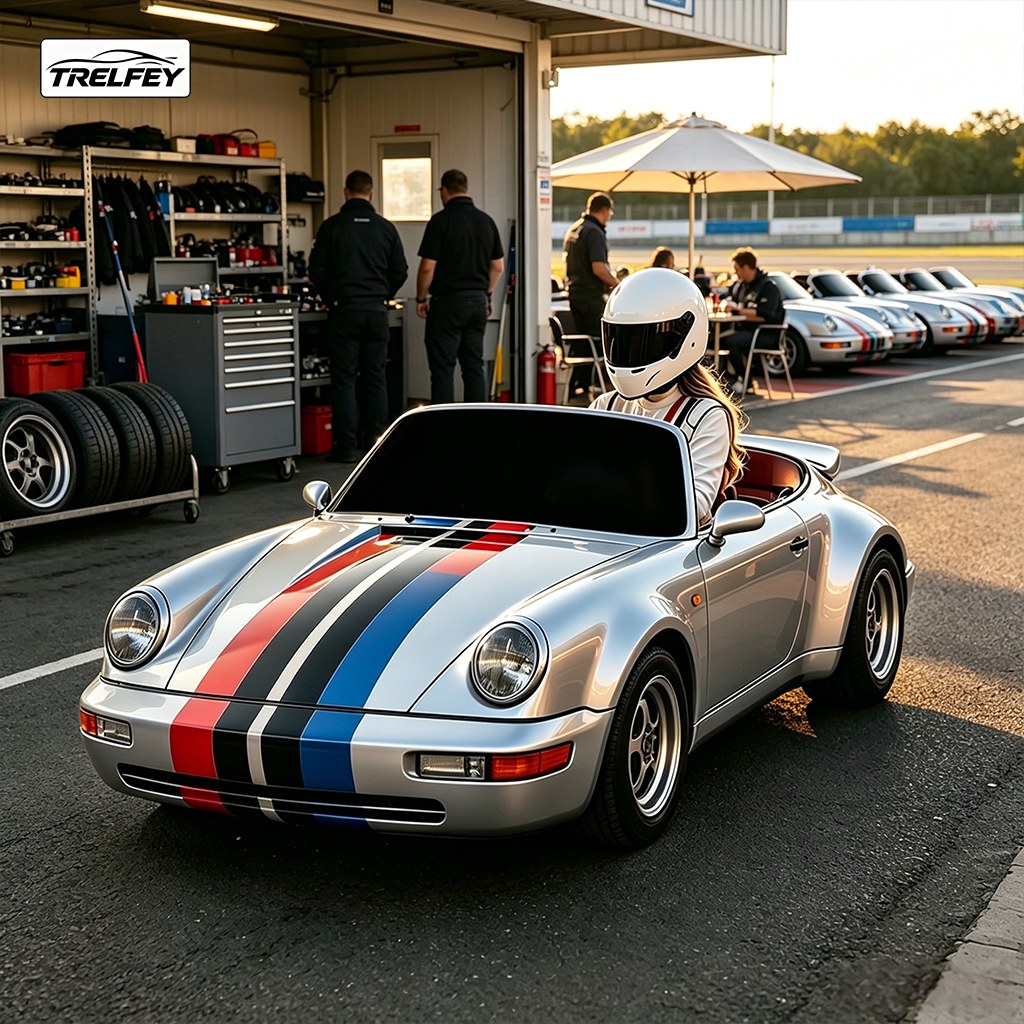
Re-run the airflow balance after any layout change. Moving the grid, adding a mezzanine or sealing a roller door all change what the hall needs. Compare indoor go kart ventilation readings against the session sheet every week, and the pattern shows up fast.
What Weak Indoor Go Kart Ventilation Costs You
Prices vary by climate, building and code, so read this as a map of cost lines rather than a quote.
| Cost line | Petrol fleet in a closed hall | Electric fleet | Where it lands |
|---|---|---|---|
| Air handling | Continuous extract sized to peak source count | Comfort ventilation only | Monthly energy bill |
| Exhaust extraction | Hoods, ducting, make-up air | Not required | Capital cost at fit-out |
| Noise treatment | Absorption plus source control | Absorption for tire and impact noise | Capital cost, lease risk |
| Staff retention | Shift symptoms drive turnover | Recruitment pool widens | Hiring and training cost |
| Customer trust | Haze and smell show up in reviews | Clean-air positioning | Repeat bookings |
| Incident exposure | Unmeasured carbon monoxide is unmanaged | Combustion risk removed at source | Insurance and claims |
Read the table as a switching argument, not a shopping list. The electric column is shorter because the problem is gone, not because the hardware is cheaper to buy.
Where to Start This Month
Thirty days: buy two monitors, start the log, write the trigger rule. Sixty days: kill idling, service the filters, capture exhaust at the pit. Ninety days: model a mixed fleet and price the electricity against the fuel you no longer buy.
If you are planning a new hall, size the airflow before you sign the lease, not after the first complaint. Our business solutions team can model fleet mix against your floor plan. The full kart range lists the specifications your airflow calculation needs, and every service interval sits in the support library.
Indoor go kart ventilation is one of the few operating costs you can design out of a venue. Measure the air, remove the source, and every other number on the page gets easier to defend.