Family entertainment center karting looks like the safest line on a new build budget. The attraction has a visible ticket price, a queue you can photograph, and a repeat rate that beats almost anything else on the floor. Then the doors open and the numbers behave nothing like the spreadsheet promised.
The damage in family entertainment center karting almost always traces back to five decisions made before the first kart arrives: who fits the seat, how long a lap really takes, how long a guest occupies the building, what powers the fleet, and which paperwork you actually read. None of these are exotic problems. All of them are expensive to reverse once the floor plate is poured.
Why Family Entertainment Center Karting Fails on the Spreadsheet
Most venues price karting as an add-on: one more credit on the game card, one more line in the party package. That framing hides what you are really buying — a small fleet of machines with their own service intervals, a floor that has to carry them, and a staffing model that changes the moment the door opens.
The operators who get it right run the model backwards. They start with the rider, then the lap, then the ticket. Here are the five decisions that break that order, and the check that keeps each one honest.
Mistake 1 — Buying Adult Karts for a Family Audience
The default fleet in most catalogs is built around a 180 cm (5 ft 11 in) adult. Drop that kart onto a family entertainment center karting floor and half your audience cannot reach the pedals comfortably. Every junior session then turns into a staff-assisted crawl, and your throughput quietly dies in the pit lane.
The fix is not a smaller engine. It is adjustable geometry: a sliding pedal box, a seat with real fore-and-aft travel, and a shoulder width that still holds a 12-year-old in place through a corner without pinning an adult’s arms.
The measurements that decide junior fit
- Pedal travel range, in millimeters or inches — ask for the minimum setting, not the maximum.
- Seat fore-and-aft adjustment, measured at the hip, not the backrest.
- Load rating with two occupants, because a parent-plus-child lap is the highest-margin ticket in the building.
Frames rated to 300 kg (661 lb) cover an adult and a child with margin to spare. Below that, the axle and bearings start telling you about it at month six, usually as a vibration the marshals notice before the maintenance log does.
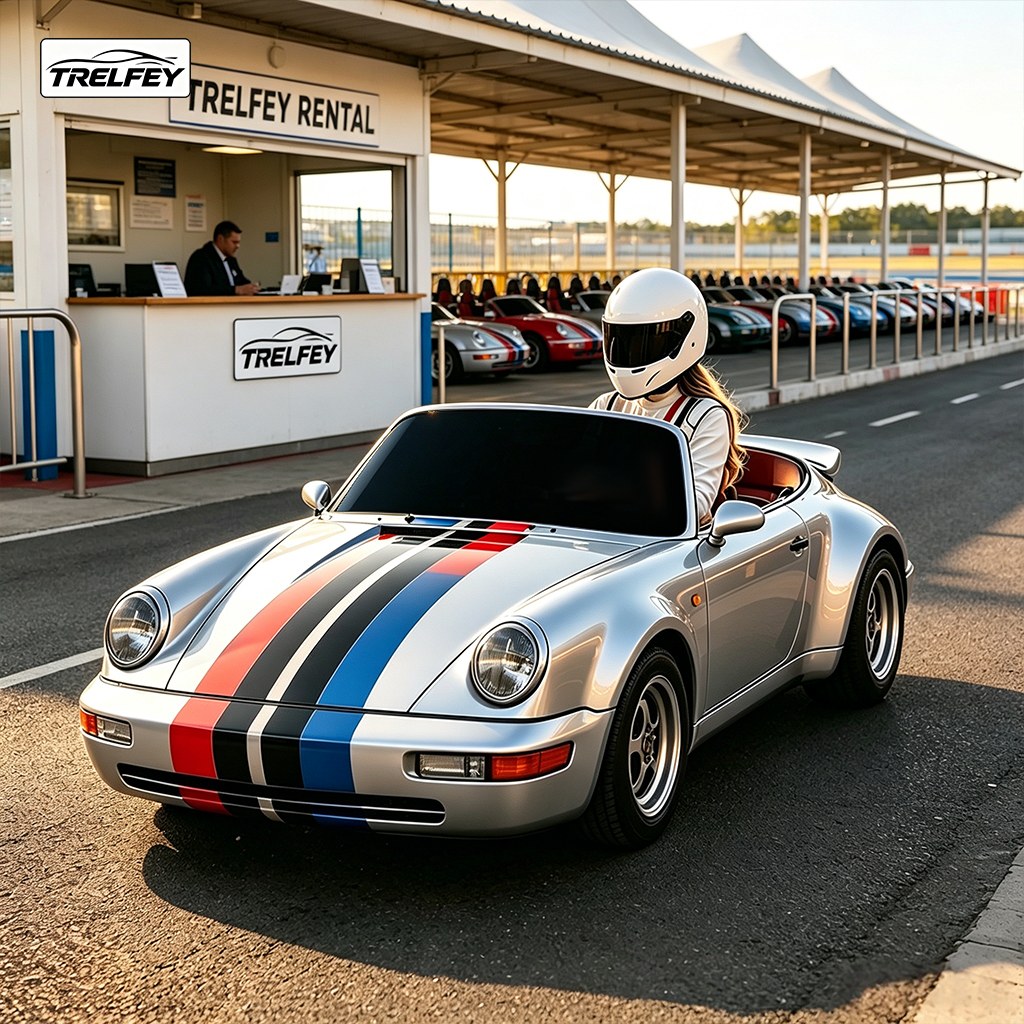
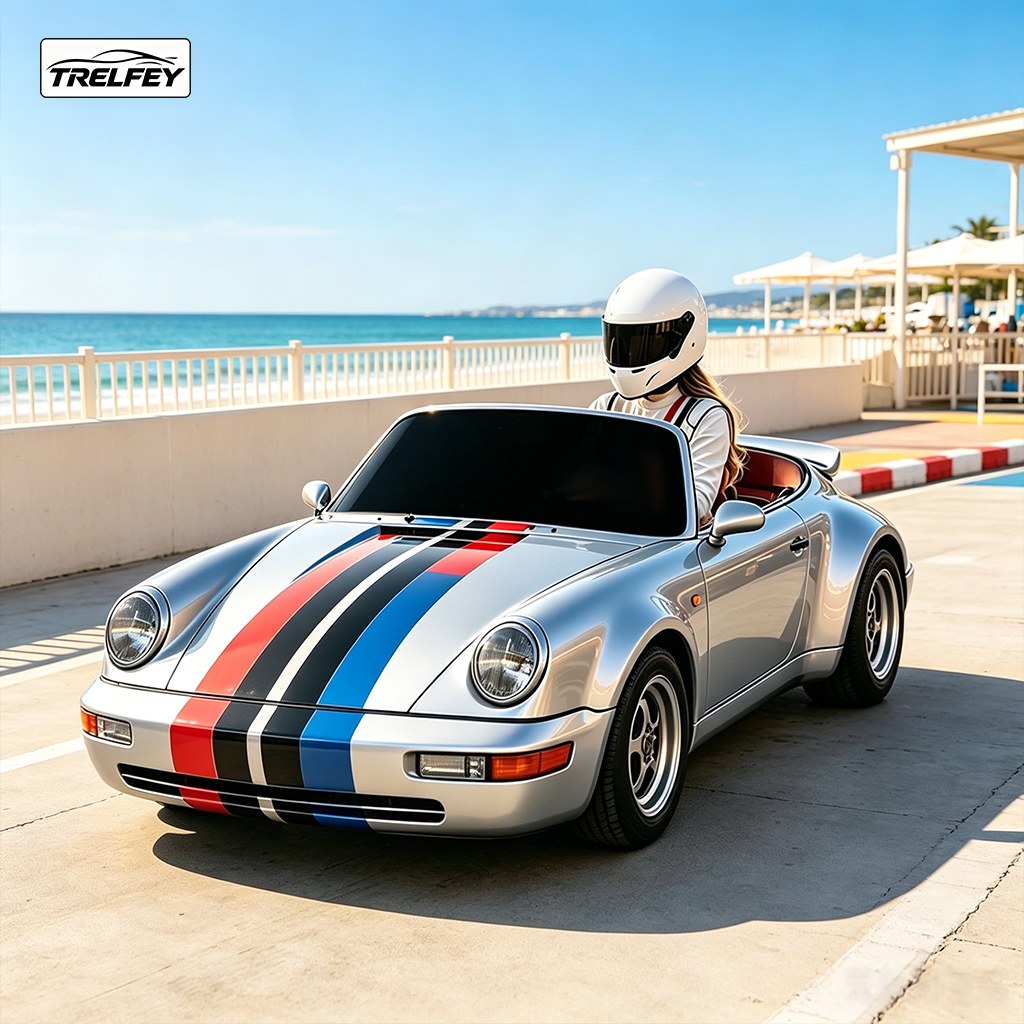
Power is a secondary question here. A 2500 W mid-drive chassis on a 72 V 50 Ah pack, like the P964 Cabrio, will run 80 km/h (50 mph) at full setting — far more than a family lap needs. What matters is that the same platform can be limited for junior sessions and opened up for adult evenings, so one fleet serves two audiences.
Mistake 2 — Designing the Track Around a Photo, Not a Lap Time
Track plans get approved on how they look from the mezzanine. The number that actually pays the lease is lap time, because lap time sets how many karts a session can hold before the first one catches the last.
Walk the plan with a stopwatch before you commit. A layout that reads as generous on paper often produces a 40-second lap, and a 40-second lap means the field compresses into a train within eight minutes. Add a single slow corner and the train becomes a traffic jam with helmets.
Two levers fix this in family entertainment center karting without adding floor space. First, a mild chicane that costs three seconds a lap but forces a real braking point. Second, staggered release — sending karts out in pairs instead of a pack, so the fast guest and the nervous first-timer never share a corner.
| Input you must model | Why it decides the answer | How to measure it on site |
|---|---|---|
| Lap time (seconds) | Sets how many karts fit a session | Walk the plan with a stopwatch, three laps |
| Session length (minutes) | Sets your daily capacity and your party slot | Match it to the package you already sell |
| Turnaround (minutes) | Sets the real gap between sessions | Time a full unload, helmet swap and reload |
| Fleet size | Sets peak throughput and your spare ratio | Karts per session plus 25% spares |
Mistake 3 — Forgetting the Twelve Minutes Nobody Bills For
Every family entertainment center karting venue models the lap. Very few model the twelve minutes either side of it: waiver, wristband, helmet fit, briefing, seat adjustment, and the slow walk back through the gate. Those minutes are not overhead. They are the difference between three session cycles an hour and six.
Time the loop once, on a Saturday, with a clipboard. Four numbers are enough:
- Gate to helmet
- Helmet to seat
- Seat to first lap
- Last lap to exit
They rarely match anyone’s assumption, and the gap between their sum and your session slot is capacity you are giving away for free.
Mistake 4 — Putting Petrol Power Inside a Sealed Box
This is the mistake that shows up on a noise complaint rather than a P&L. Occupational guidance is blunt about the threshold: exposure at or above 85 decibels as an eight-hour average triggers a hearing conservation program, and if you have to raise your voice to speak to someone three feet away, you are probably above it. The U.S. Department of Labor’s occupational noise guidance is worth reading before you sign a lease on a concrete box.
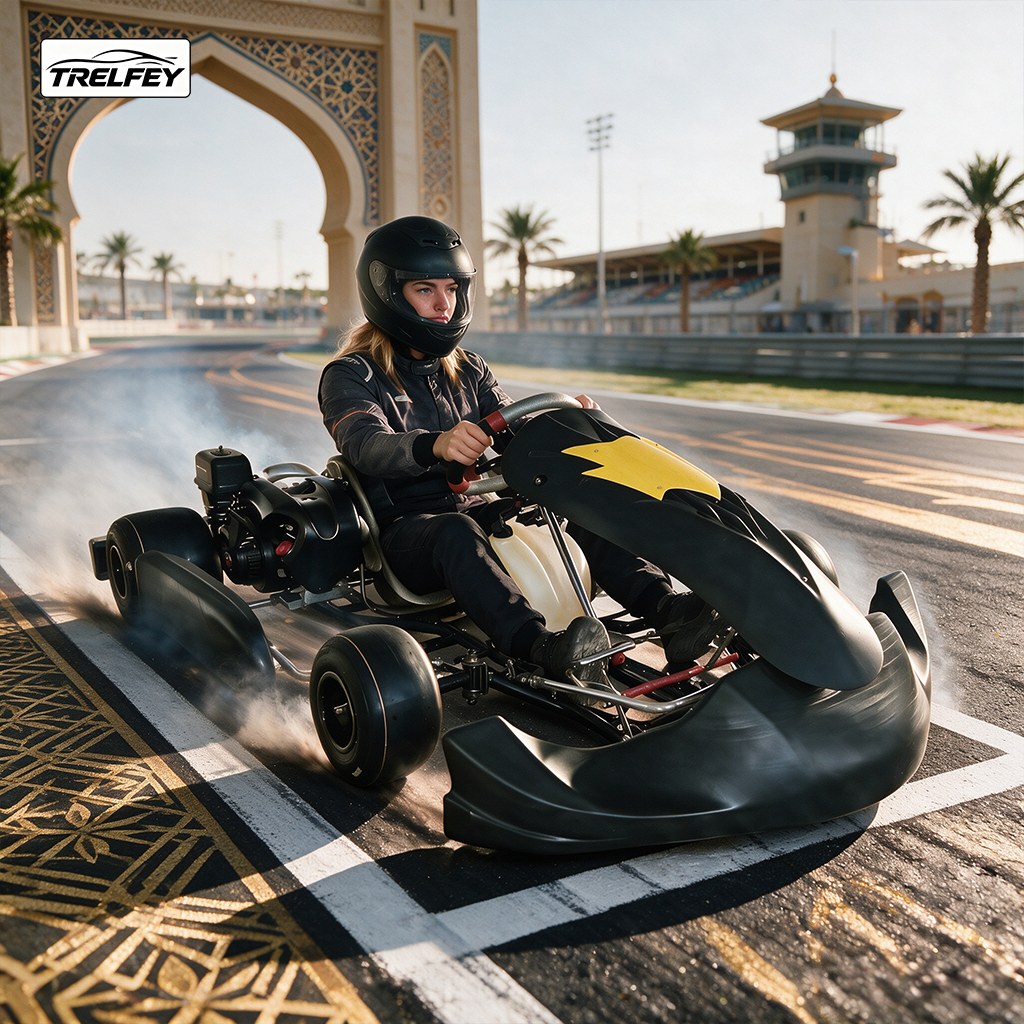
A petrol fleet is hard work in family entertainment center karting for exactly that reason: exhaust extraction, air changes, and a fuel storage plan your insurer will want to see. Electric removes the exhaust, though not the heat, the dust or the need for airflow.
What the electric case looks like in practice
A 2500 W mid-drive motor on a 72 V 50 Ah pack returns roughly 60 km (37 mi) of range — several full session blocks before a swap. A swap is a pack out, pack in job one marshal can do between groups, which is why indoor venues tend to converge on it.
It is not a universal answer. A GT3-style chassis such as the GT3-RS runs 60 km/h (37 mph) on a 220 kg (485 lb) frame with a 300 kg (661 lb) load rating — built for tighter indoor layouts rather than long outdoor straights. Match the platform to the room, not to the brochure.
Mistake 5 — Filing the CE Paperwork Without Reading It
CE marking on a kart is a manufacturer’s declaration, not a certificate handed out by a third party. The legal basis in Europe is the Machinery Directive, published in full on EUR-Lex as Directive 2006/42/EC, and what it requires is a technical file that supports the claim — drawings, risk assessment, guard list, test records.
Family entertainment center karting venues get caught here because they ask for “the CE certificate”, receive a one-page declaration, and file it. That page proves someone signed something. It does not prove the guards fit your floor plan or that the brake test was run on your build.
Three documents to request before the deposit
- The EC Declaration of Conformity, naming the machine type and the directives applied.
- The technical file index, so you can see what exists even if you never read all of it.
- A test and inspection record covering brakes, steering play and speed limiting.
If a supplier cannot produce all three for the model you are buying, that is your answer. Our own document set and warranty terms are available on request, and it is fair to hold any supplier to the same standard.
The Five Numbers to Model Before You Commit
Run these numbers for family entertainment center karting in a spreadsheet before the floor plan goes to the contractor. They take an hour and they will change at least one decision.
- Revenue per kart-hour — ticket price divided by session minutes, times sixty, times karts in the session.
- Capacity per hour — sixty divided by session plus turnaround, times fleet size.
- Fleet size — peak karts per session plus 25% spares, so a dead kart never closes a slot.
- Simultaneous charging load — karts charging at once, times charger draw, against your supply.
- Service hours per week — fleet size times interval hours, divided by your actual technician hours.
If the fourth number surprises you, the electrical upgrade is a capital cost you have not budgeted. If the fifth does, you are planning to run a fleet without the labor to maintain it — the most common reason a new karting floor looks tired by month eighteen.
What to Ask a Supplier Before You Sign
In family entertainment center karting, vague answers are the cheapest warning signal available. These five questions sort suppliers faster than any specification sheet.
| Ask | A good answer sounds like |
|---|---|
| Pedal and seat adjustment range | Numbers in millimeters or inches, per setting |
| Load rating with two riders | A figure such as 300 kg (661 lb), in writing |
| How speed is limited for juniors | A specific controller or mechanical setting, changeable per session |
| Battery swap time, one person | Minutes, plus the pack weight and lifting method |
| Spare parts list and replenishment | Named parts with a stated path, not “everything is in stock” |
Fleet buyers should also ask what changes when the order grows past ten units. A supplier who cannot describe a fleet service rhythm is selling you a showroom machine, not a rental asset. Custom liveries and bodywork are worth discussing only after the service answers hold up, once the platform itself is settled.
Family entertainment center karting does not fail because the ride is boring. It fails because five decisions were made by people who never timed a turnaround, never measured a pedal reach, and never read past page one of a declaration.
Fix the order of the work: rider fit, lap time, dwell, power, paperwork. Then price the ticket against the capacity those five numbers actually produce. If you want a second pair of eyes on the plan, our team reviews floor layouts and fleet mixes through business solutions, and the full model range — including junior-friendly and speed-limited platforms — is on the products page.