
The karting off-season looks like empty space on the calendar. It is really the cheapest window you get all year. Every bay is free, and every kart is parked.
A mechanic can pull a rear axle at 10 a.m. without a queue of customers asking why session four is late. That is why the karting off-season matters more than any spring marketing push.
Why the karting off-season decides next year’s margin
Peak-season revenue is capped by the number of karts that can run. It is not capped by demand. If two karts sit out a Saturday, you lose that session twice: once in the bay, once at the refund counter.
The sector keeps adding capacity as well. Data on amusement and recreation establishments puts the US subsector past 100,000 private venues in early 2026, and the count has risen every quarter. More venues chase the same weekend families. That leaves less tolerance for a kart that dies mid-session.
The capacity ceiling is really a repair schedule
Off-season work is the only work you can schedule. Anything you defer becomes an emergency at the counter, with a phone in one hand.
Slow weeks are the only weeks with slack
A bay in February costs you nothing to occupy. The same bay in August costs sessions. Pull the fleet apart while the calendar is soft, and you do the job properly once.
What a mid-season failure really costs
Count the whole bill, not the part. You pay for the spare, the labour, the refunded session and the review a parent leaves that night. Then the kart stays down while the queue keeps arriving. Every following session runs one kart short.
The karting off-season work order, in sequence
Follow this order. Structural checks come first, because a cracked frame condemns a kart. A tired set of tires only slows it down.
| # | Off-season job | Best window | Peak-season failure it prevents |
|---|---|---|---|
| 1 | Frame and weld inspection | First two weeks | Sudden retirement of a whole kart |
| 2 | Steering, kingpins, seat mounts | First two weeks | Vague steering and loose seat backs |
| 3 | Battery pack capacity test | Mid off-season | Range fade on the third session |
| 4 | Motor, controller, connectors | Mid off-season | Heat shutdowns on a busy Saturday |
| 5 | Tire audit and rotation | Mid off-season | Uneven grip and surprise blowouts |
| 6 | Brake rebuild and spares stock | Late off-season | Fade, seized calipers, missing parts |
| 7 | Track, barriers and air quality | Last two weeks | Closures, complaints, incident reports |
Jobs 1 and 2: strip the fleet and read the frames
Wash the karts first. Dirt hides the defects you are hunting. Then lift each chassis onto stands and work backwards with a light and a pick. Budget one full day per kart for the first karting off-season audit, and half a day after that.
Read the welds, not the paint
Check every weld on the main hoop, the spindle brackets and the rear axle carriers. Hairline cracks start at the weld toe and creep into the parent metal. Clean the area and look for a faint dark line.
A cracked weld is a retirement decision. It is not a job you hand to whoever is free on Friday. Then check the floor pan for scrape-through. Rental karts live on their bellies at the kerbs, and a thin pan becomes a sharp edge.
Steering, kingpins and seat mounts
Rock each front wheel at twelve and six o’clock. Any click means a worn kingpin or bearing. Turn the wheel lock to lock and feel for a tight spot, which usually points at a dry column bearing.
Seat mounts deserve their own pass. A loose seat back flexes under braking, and the driver feels a knock. Torque the bolts and replace any nylon nut that spins on by hand.
Jobs 3 and 4: drivetrain and battery care on an electric fleet
Electric fleets fail in two quiet ways. The pack loses capacity, or the controller runs hot. Both show up in July. Neither shows up on a five-minute lap of the yard.
Pack health is a capacity test, not a voltage reading
A resting voltage proves the pack is charged. It says nothing about health. Discharge each pack at a steady load and log the ampere-hours it delivers. Compare that figure with the same pack last year.
A pack that lost a fifth of its capacity still finishes a short session. Then it fades on a busy one.
Store packs as if the season is already booked
Store packs at partial charge through the karting off-season. Keep them above freezing, and never park a full pack in a cold container for months.
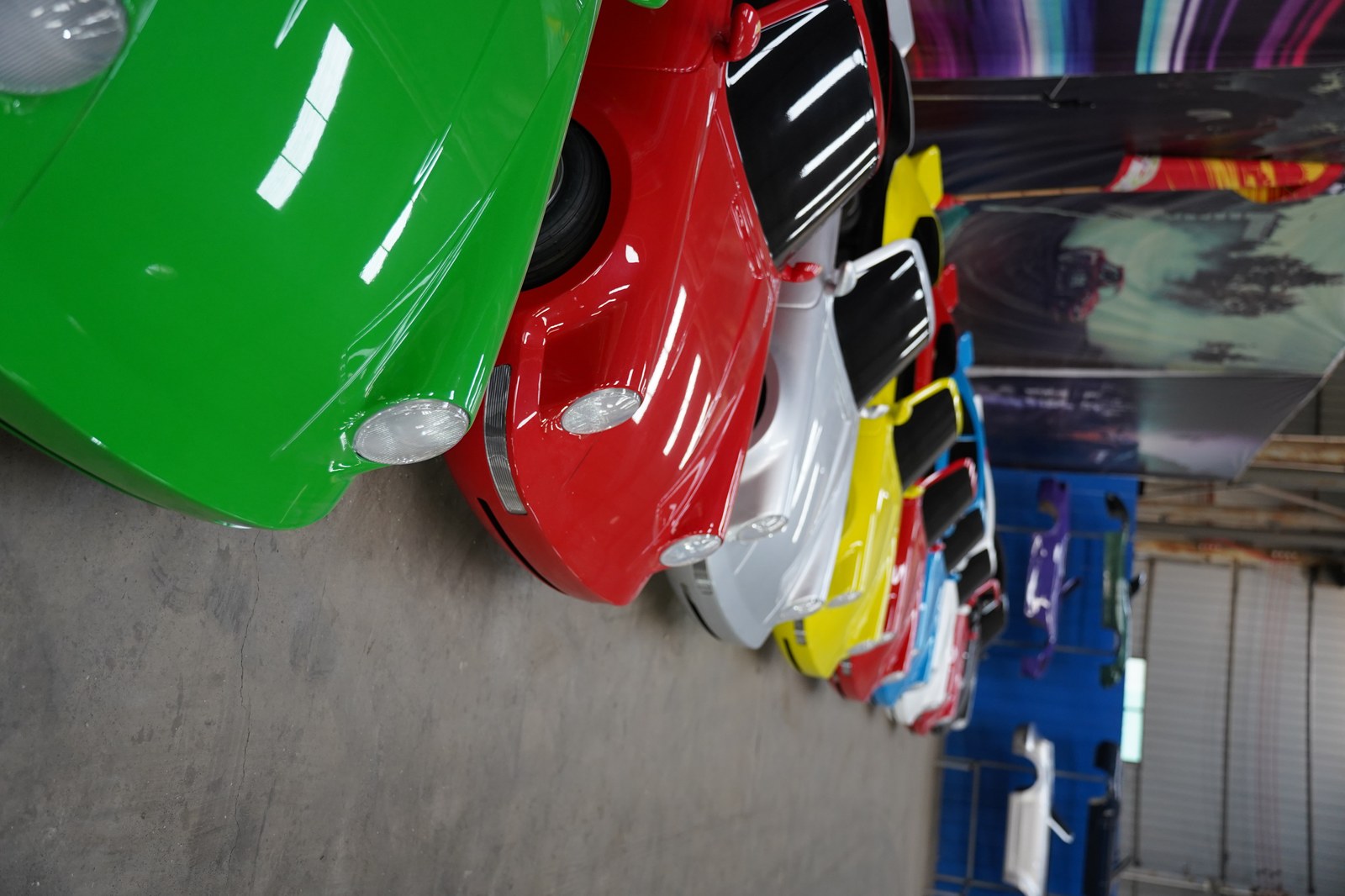
Our 964-style cabrio runs a 72 V 50 Ah pack behind a 2,500 W mid-mounted motor. It is rated at 80 km/h (50 mph), 60 km (37 mi) of range and a 300 kg (661 lb) payload. Treat those figures as the benchmark for a healthy pack, not a promise about a tired one.
Controllers, connectors and thermal paths
Open the controller cover, blow out the dust, and look for a browned terminal or a stiff cable jacket. Heat leaves evidence. Re-seat every connector and add dielectric grease to the ones near the floor. Confirm the cooling fins are not packed with tire rubber.
Then check drivetrain hardware: chain tension, sprocket wear, axle bearings and motor mount bolts. A GT3-style kart carries 220 kg (485 lb) of its own mass plus 300 kg (661 lb) of payload. A loose motor mount turns into a snapped chain under load.

Jobs 5 and 6: tires, brakes and the spares you cannot run out of
Tires and brakes are consumables. The job is inventory plus condition, not repair. Sort every tire by tread depth and by feel, mark the pairs, and store them away from sunlight and electric motors.
- Measure tread depth on all four corners and write it on the sidewall in chalk.
- Pair tires with similar wear so a kart does not pull under braking.
- Replace any tire with a cut, a bulge, or a bead that has been run flat.
- Rebuild calipers, replace fluid, and bed in new pads before the first paying session.
- Stock one full brake set, two chains, axle bearings and a spare controller per ten karts.
- Photograph the parts shelf so reordering happens by number, not by memory.
Spares are the cheapest insurance you can buy. A chain on the shelf saves a session that costs far more. If your list is thin, the parts and service team can map the consumables for your exact fleet.
Job 7: track, barriers and the air you cannot see
The last karting off-season job is the one customers notice first. Walk the circuit the way a first-time visitor would. Look for barrier gaps, exposed bolts, lifting kerb edges and glossy painted lines. Replace padding where the foam has gone hard, because hard foam transfers load instead of absorbing it.
Ventilation numbers you can defend
Then handle air. Indoor venues need real ventilation numbers, not a working extractor fan and a good feeling. Outdoor guidance on indoor air quality is a fair starting point for what to measure, even though it was written for buildings rather than race tracks. Log carbon monoxide and carbon dioxide at peak and at idle. Keep that log where staff can find it.
Finish with paperwork. Update the pre-ride sheet, the incident log and the service record for every kart. A new marshal should be able to follow the same routine in week one.
Turn slow weeks into revenue instead of silence
The karting off-season is also a sales window. Corporate groups book team days months ahead. A venue that answers in February with a firm quote usually wins a booking that a busier venue answers in April.
Sell the quiet weeks on purpose
Package the quiet weeks on purpose. Run a maintenance-open evening where members watch a teardown. Launch a winter league on a short calendar. Sell gift cards at the counter, and put a date on them.
If you plan to refresh liveries before spring, our customisation service can match bodywork colours while the karts are already stripped.
Fleet mix before fleet size
Fleet planning belongs in the same conversation. If six karts carry the whole weekend while four sit idle, the fix may be fleet mix rather than more karts. Our business solutions team builds that comparison with you, then you order early enough that parts arrive before the first busy weekend.

Print the list and pin it in the workshop
Seven jobs, six weeks, one page. Split the karting off-season work across the quiet months. Assign an owner to each job and sign it off in writing.
A signed sheet is the only proof you have that a kart was checked before a customer strapped in. Start with the frames this week, and order spares before the month ends. By the time the first Saturday queue forms, the work should already be behind you.