
Two ten-kart circuits, one in a retail unit and one on a field, can share the same equipment invoice and still finish nowhere near each other on total spend. The gap sits in the building, the surface, the power supply and the payroll you carry through the months before the diary fills.
So the only honest way to answer the cost to open a go-kart track is with a structure, not a figure. Price the five lines below in order and you can cost your own site in an afternoon. Price them out of order and you will buy karts before you know whether the floor will carry them.
What the cost to open a go-kart track actually covers
Every build we look at resolves into the same five lines. Two projects with identical kart counts can differ by a factor of two on the first three, which is why an equipment quote tells you almost nothing on its own.
| Cost line | What you are actually paying for | What moves the number most | Planning share |
|---|---|---|---|
| Site, consent and permits | Change of use, building control, fire strategy, signage, legal fees on the lease | Whether the unit was already a leisure use | 8–15% |
| Surface and containment | Tarmac or concrete, kerbs, tyre walls, catch fencing, drainage, run-off | Circuit length and how much run-off you can afford | 20–30% |
| Power and charging | Supply upgrade, distribution board, chargers, ventilation, backup | Electric fleet size and how fast you turn sessions | 10–20% |
| Fleet and first spares | Karts, tyres, helmets, restraints, a spares kit that covers week one | Kart count and duty cycle, not brand | 25–35% |
| Working capital | Wages, insurance, marketing and rent before revenue covers them | How quickly you reach weekday break-even | 15–20% |
Treat those shares as planning weights for sanity-checking a budget, not as supplier quotes — local contractor rates move every one of them. The structure is the part that travels.
Two things in that table matter more than the percentages. The first two lines are fixed the day you sign, so they decide how large a fleet you can afford, not the reverse. And the last line is the one usually trimmed in the room where budgets get approved, despite being the only line that keeps you trading through a wet February.
The four numbers that decide whether the site works
Capacity is arithmetic, not ambition. Any model of the cost to open a go-kart track starts with four numbers, and each one changes the kart count you need.
- Session length and turn time. An eight-minute session with a two-minute turnaround is six sessions per kart per hour. Stretch the turnaround to four minutes and you have lost a third of your capacity without buying anything.
- Fleet size. Karts on the circuit at once, minus one for the inevitable service queue, is your real seat count.
- Price per session. Set by your local market, not by your cost base. Your cost base decides whether that price is survivable.
- Utilisation. The share of available seats you actually sell. This is the number that separates a business from a weekend hobby.
Run it on a ten-kart circuit: six sessions an hour per kart is sixty rides an hour at full load. At €20 a session that is €1,200 an hour gross; at a 30 per cent weekday load it is €360. Identical circuit, identical staff, two different businesses. Budget the second number and treat the first as a ceiling you occasionally touch on a Saturday.
Fleet sizing is where this maths gets ignored most often. Our breakdown of how many go-karts a rental track needs works the same calculation from the demand side — use it to test the kart count a supplier proposes to you.
Three ways a build budget fails
1. Buying the fleet before the site is priced
A kart order feels like progress, so it goes first. Then the surface quote lands, the supply upgrade turns out to need a new transformer, and the fleet is now eating the contingency. Sequence the fixed lines first and the fleet last, even though the fleet is the part you can actually picture.
2. Staffing for one shift
A ten-kart circuit needs a marshal on the circuit, someone on the desk and someone handling briefings and helmets at changeover. That is three people during a session block, and it does not halve at 3pm on a Tuesday. Operators who budget two bodies discover in month two that they are paying overtime to cover the gap.
3. Building the P&L on Saturday
Saturday sells out, so Saturday becomes the model. But a venue open seven days carries seven days of rent, and the weekday hours have to be paid for by the weekend. Model revenue at 30–35 per cent utilisation across the week, and let the good days be upside rather than the plan.
Compliance is a capital line, not paperwork
In the UK, a circuit carrying the public falls under work equipment rules and, depending on how the site is set up, fairground-type ride provision. The HSE guidance on fairgrounds and fairground rides sets out the duties of a ride controller employer. What surprises new operators is not the duty itself but the record-keeping: a documented inspection regime, a named competent person, and paperwork you can produce on request.
Change of use is the second cost, and it sits on the critical path before you can tender for the surface. An empty warehouse is not automatically a leisure venue — planning permission is likely to be needed for a change of use, and the local planning authority sets the timeline, not your contractor.
The US picture differs in detail and matches in budget effect. Forty-four states regulate amusement parks, and standards such as ASTM F770 address ownership, operation, maintenance and inspection from the owner’s side rather than the manufacturer’s — ANSI summarises the ASTM F24 amusement ride standards in plain language. Whichever jurisdiction you build in, budget the inspection regime as a build line with a recurring annual cost behind it, and check with your insurer before you sign for the karts, because the premium follows the regime you can document.
Open small, then add karts
A first phase that opens on eight karts with manual timing and a temporary briefing space will out-earn a stalled project that was designed for sixteen. Phase two is more karts, triggered by a real signal: weekday utilisation holding above 40 per cent for four consecutive weeks. Phase three is the timing system, the café and the party room, all of which sell better once there is a queue to monetise.
Two rules keep phasing honest. Hold back the price of two karts as an unspent reserve, because the first month of trading always produces a bill nobody forecast. And buy spares with the first fleet rather than after the first failure — a kart waiting on a brake master cylinder is a seat you are still paying rent on.
If you are planning more than one site, the sequencing matters more, not less. More operator-side guides sit in our insights archive.
Matching the fleet to the budget you have
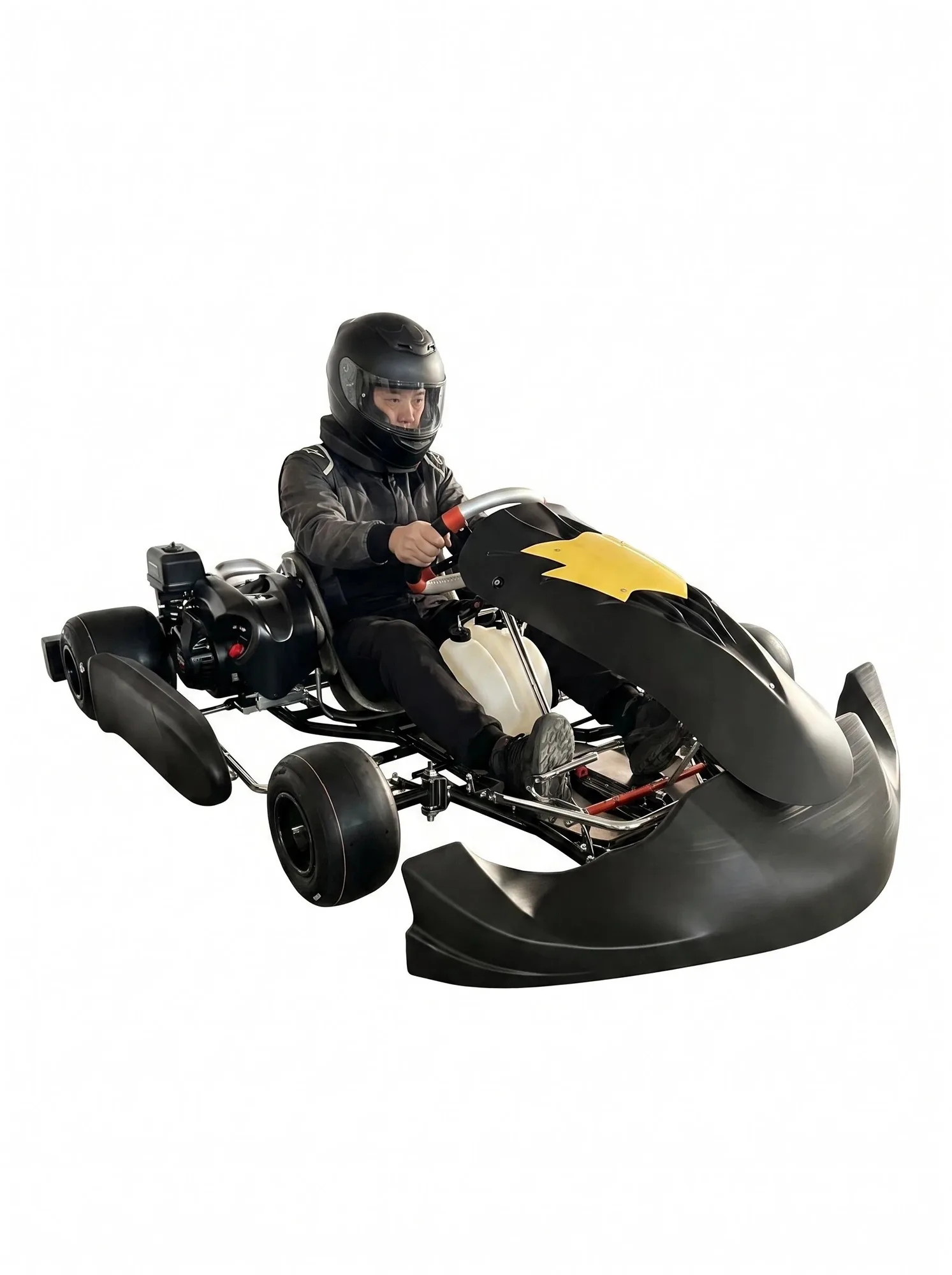
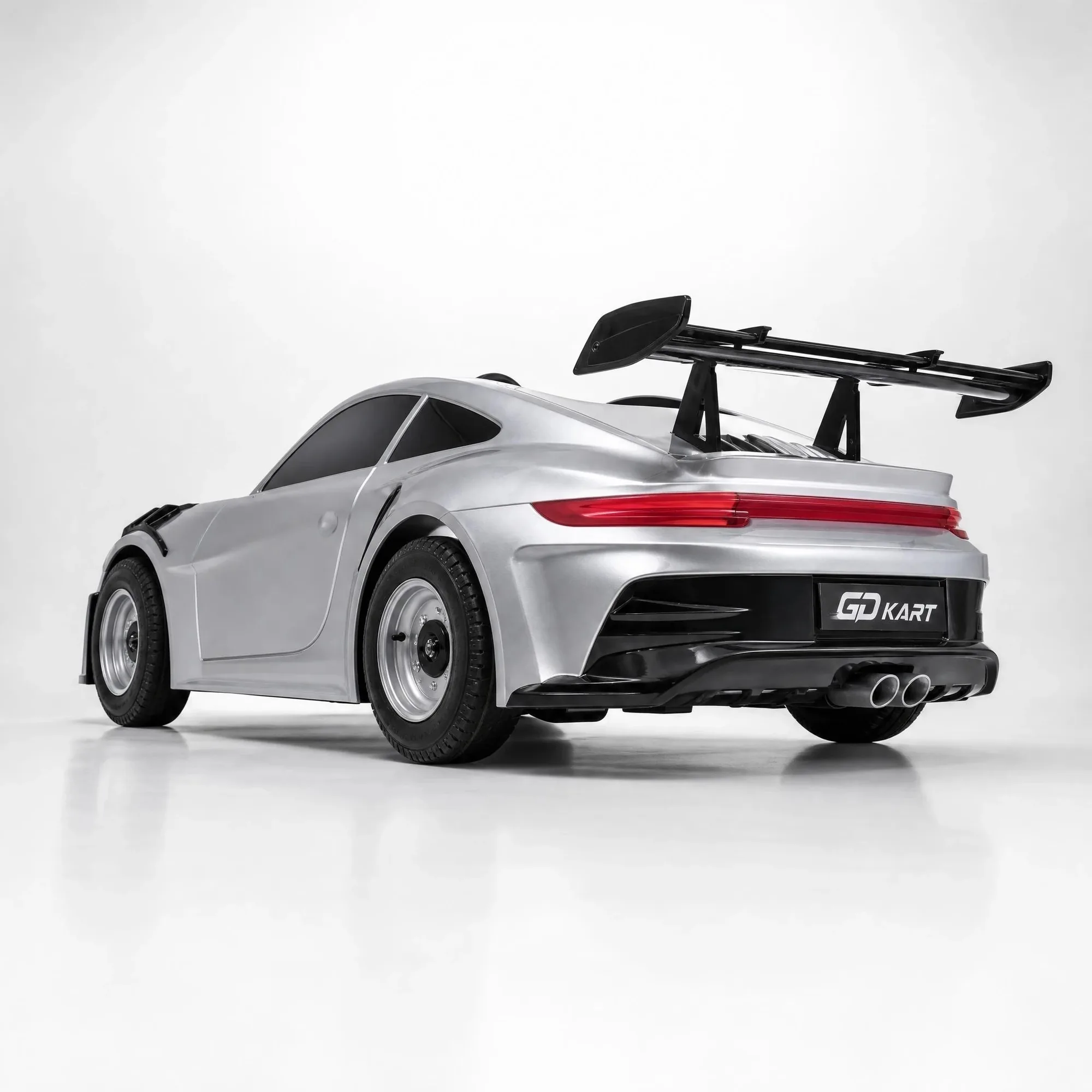
Once the site, surface and power are priced, the fleet decision is usually narrower than it looks. For an outdoor circuit where session turnover drives revenue, the GT3 RS style kart is the one to cost first: it is built for repeat eight-minute sessions and its charging profile fits a two-minute turnaround. Where the budget has to stretch across more seats, the ZS225-V petrol kart puts capital into the circuit instead of the supply upgrade. Both are configured to your circuit length and driver mix; neither makes sense before the surface is priced.
FAQ
How much does it cost to open a go-kart track?
There is no figure that survives contact with a real site, because four of the five cost lines are set by the building and the ground rather than by the karts. Cost the site, the surface and the power supply first, then let the remaining budget decide the fleet size. Anyone quoting you a total before seeing the site is quoting an average that does not exist.
Is an indoor track cheaper to open than an outdoor one?
Indoor tracks usually save on surface and containment and spend it back on the building: ventilation for electric drivetrains, fire strategy, and a lease in a retail location. Outdoor tracks save on rent and spend it on tarmac, drainage and weather resilience. The cheaper option depends on which of those two you can buy well in your market.
How many karts should I buy in year one?
Enough to fill your session block at the utilisation you can actually sell, plus one spare. For most new circuits that lands between eight and twelve. Buying to peak Saturday demand leaves capital sitting idle five days a week.
Do I need planning permission to open a go-kart track?
Usually yes, if you are changing the use of a building or laying a circuit on open land. Confirm it with your local planning authority before you sign a lease — the consent timeline, not the build timeline, is what delays most openings.
How long does it take from lease signature to first paid session?
Longer than the construction programme suggests, because consent, supply upgrades and inspection sign-off run in sequence rather than in parallel. Plan the critical path backwards from your opening date and assume the power connection is the item that slips.
Send us your site plan, circuit length and the fleet size you are budgeting for, and we will come back with a kart configuration and a delivery schedule you can put in front of your lender — request a quote.