
You have seen it. A customer grabs the wheel, the front end pushes wide, and the engine note climbs while nothing much happens. The tires squeal, the lap time is slow, and the kart feels broken. It is not broken. Go kart drift is decided before the driver sits down, by four things: axle stiffness, tire pressure, weight transfer and the surface under the wheels. Fix those and an average customer can hold a clean slide by their second session. Ignore them and a good driver still looks clumsy. Most go kart drift complaints are setup complaints wearing a driver’s helmet.
Here is the order we recommend for rental fleets: one lever at a time, cheapest fix first, nothing that burns a weekend of tire budget for no gain.
What Go Kart Drift Actually Requires
Every tire has a grip budget. It spends that budget on two jobs at once: turning the kart, and pushing it forward or slowing it down. Ask for more cornering force than the rubber can give and the contact patch starts to slide. The angle between where the wheel points and where it really travels is the slip angle, a term tire engineers use for exactly this gap. That relationship between force and speed is plain centripetal force physics, and it does not change because the vehicle is small.
A kart drifts when the rear tires reach that limit before the fronts do. That is the whole problem in one sentence. Your job is not to teach heroics. Your job is to arrange the kart so the rear lets go first, at a speed a paying customer can control, and comes back when they lift. Push the fronts over the limit instead and you get understeer. Understeer is safe, slow and boring, and boring does not get rebooked.
The Live Axle Decides Almost Everything
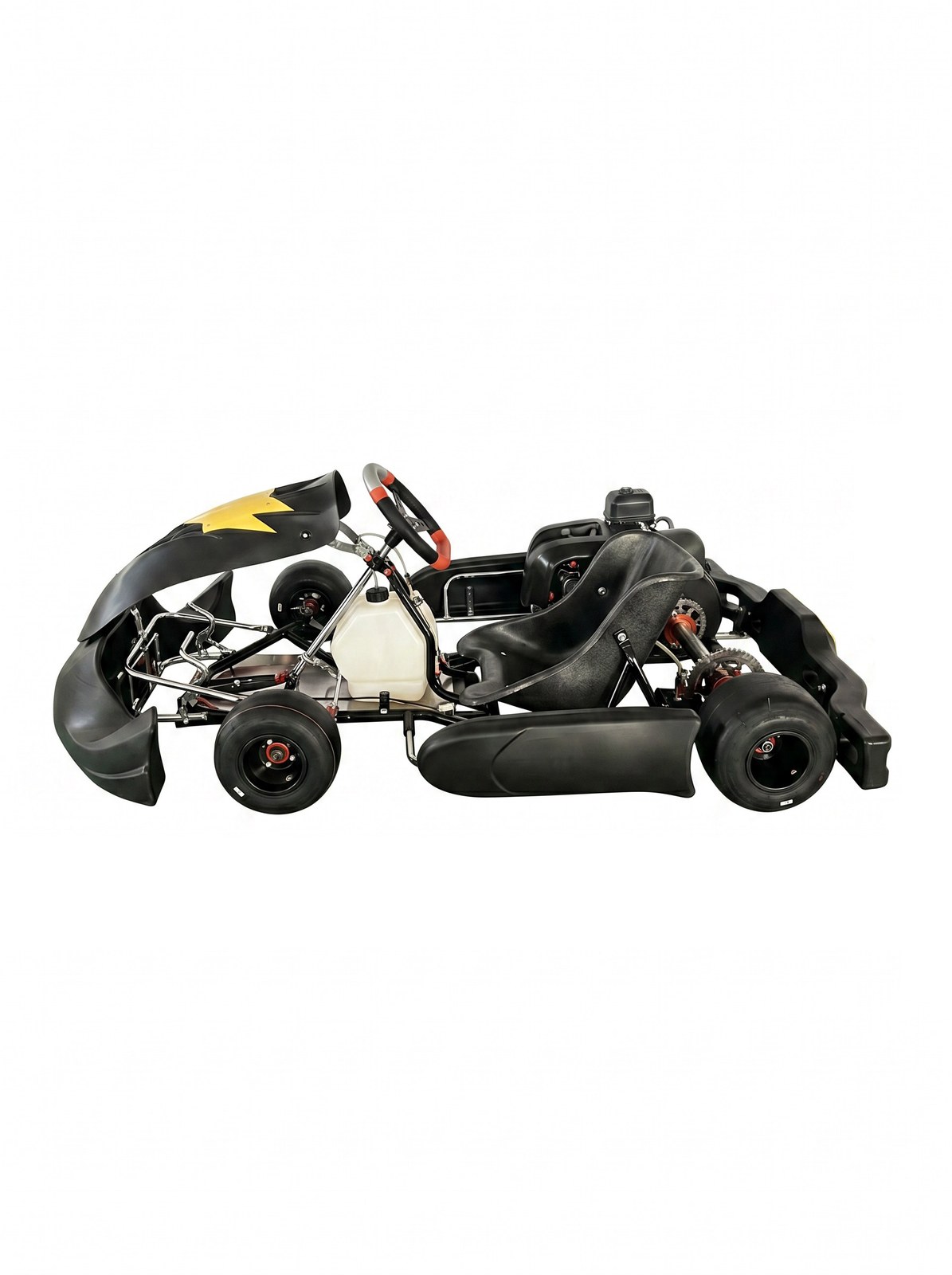
Most rental karts run a solid rear axle, and that one part is why go kart drift stays out of reach for so many venues. Both rear wheels turn at the same speed, always. In a corner the outside wheel has further to travel, so the axle fights the turn and the tires scrub to make up the difference. That scrub is stable and predictable, which is why rental fleets love it. It is also the reason a stock rental kart will not drift.
Why a locked axle refuses to slide
A locked axle keeps both rear contact patches working as one unit. Grip at the rear stays high, the front gives up first, and you get the wide push you have been watching all weekend. You can mask it with pressure and coaching, but you cannot remove the cause.
What a drift ring changes, and what it costs
A drift ring, sometimes called a slipper or free-float sleeve, sits on the rear axle and lets the two rear wheels rotate at slightly different speeds. The axle stops fighting the corner. Rear grip drops, the tail steps out earlier, and go kart drift becomes something a beginner can find within a few laps. Competition classes follow tight technical rules on this part, so check the FIA regulations before you assume a track setup will pass scrutineering.
The trade is real. A drift ring is an extra wear part, it rewards sloppy throttle, and rear tires wear faster because they slide more often. Decide per fleet, not per kart. Keep one gripped axle for nervous first-timers and ring-fit karts for the drivers who come back for the slide.
Tire Pressure: The Cheapest Go Kart Drift Lever
Rear pressure is the fastest lever you own and the one most tracks never record. Drop it and the carcass flexes more, the contact patch grows, and the rear digs in. Raise it and the tire goes stiffer and rounder, breaks away sooner, and slides with less warning. Neither setting is correct on its own. What matters is that one person owns the number and writes it down.
Tire engineers describe the same trade in more formal language through SAE technical papers, but the practical version fits on one page. Move in small steps, around 0.1 bar (1.5 psi) at a time, and run the same driver through the same corner before you judge the change. Log pressure, surface condition and how the kart behaved. Two weekends of that log will teach you more than any generic setup chart.
| Change | What the rear does | Trade-off |
|---|---|---|
| Lower rear pressure | More bite, later breakaway | Slower to rotate, more sidewall heat |
| Higher rear pressure | Earlier, sharper slide | Less warning, harder for beginners |
| Softer rear compound | More grip under braking | Shorter tire life |
| Harder rear compound | Longer life, easier slide | Less grip when the driver lifts |
Weight Transfer Is a Setup Item, Not a Style
Go kart drift lives or dies on where the weight sits. A kart has almost no suspension, so the chassis is the spring. Weight moves to the outside rear when a driver turns in, and how fast it moves decides whether the slide arrives smoothly or as a snap. Seat position, rear track width and caster all change that transfer before the driver touches the wheel.
Then coach the input, because it is free. A driver who lifts mid-corner puts weight back on the rear and the kart straightens. A driver who carries a light brake pressure into the turn keeps weight on the nose and the rear stays loose. That one habit is worth more than any part you can bolt on.
Why Grippy Karts Disappoint Repeat Customers
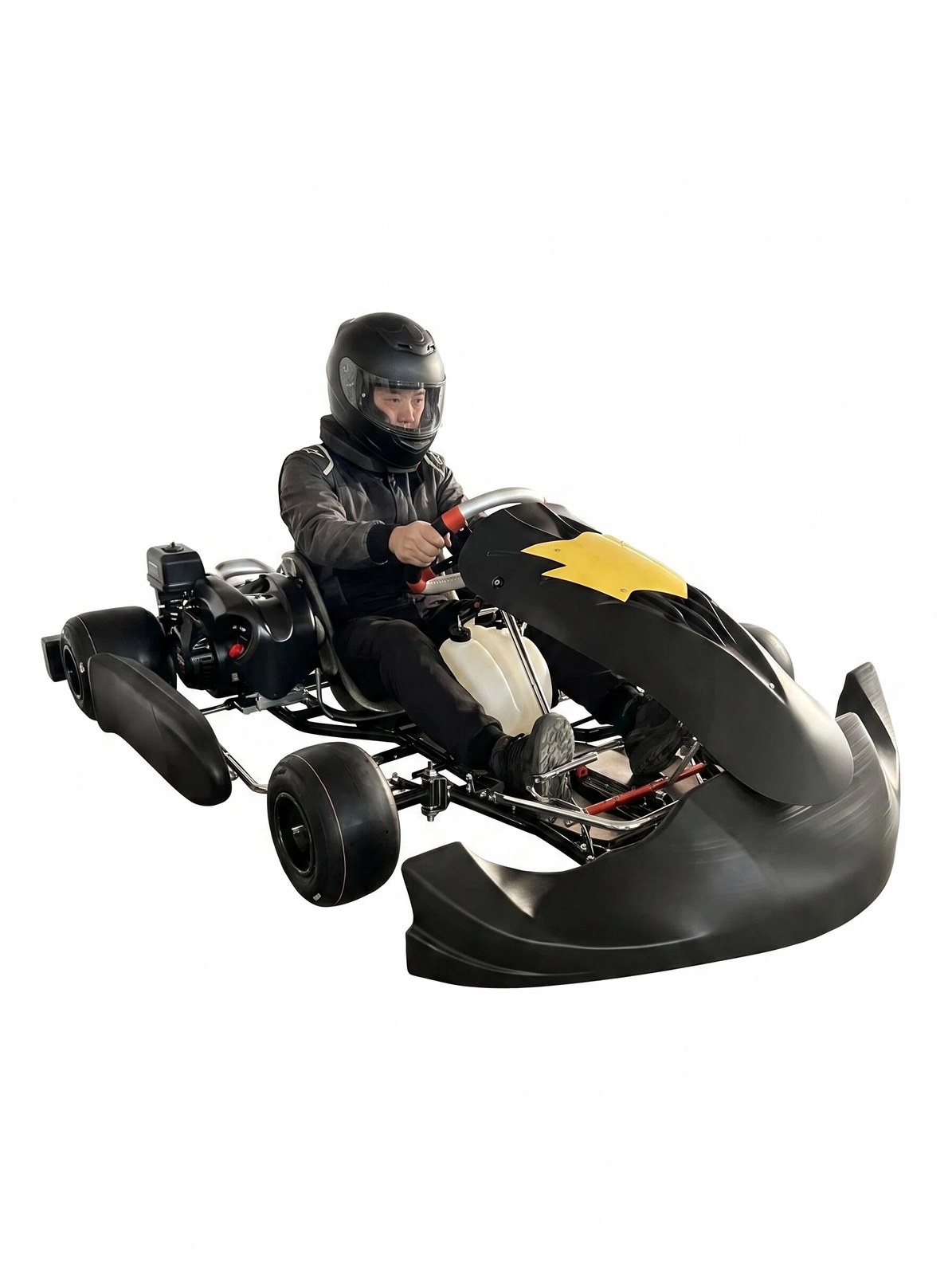
A kart that refuses to slide is safe on day one and dull by day three. Customers do not rebook because the barriers were soft. They rebook because something happened. A tail that steps out and comes back is the cheapest thrill your venue can sell, and it needs no extra power.
On our wide-body and 964-style models, a 2,500 W mid-mounted motor and a 72 V 50 Ah pack already give 80 km/h (50 mph) and roughly 60 km (37 mi) of range, with a 300 kg (661 lb) load rating. The GT3-style chassis is milder at 60 km/h (37 mph), 220 kg (485 lb) curb weight and the same 300 kg (661 lb) load. All of these are track-only machines. The slide comes from setup, not from top speed.
Surface and Track Prep Decide Half the Outcome
You can tune a kart perfectly and lose the slide to a dirty floor. Friction between rubber and track is the resource every go kart drift setup depends on, and it changes hour by hour.
- Dust and rubber marbles. Sweep or blow the line between sessions. A dusty line breaks away with no warning at all.
- Rubber laydown. A line that has taken rubber grips hard, and the edge of it does not. Expect the slide at the transition, not mid-line.
- Surface temperature. Cold concrete at opening time behaves nothing like the same floor at 8 p.m.
- Paint and joint strips. Painted arrows and expansion joints cause most of the sudden, unearned spins you will see on camera.
- Moisture. A humid morning leaves a film that reads as a broken kart to a first-time driver.
A Setup Order That Protects Your Tire Budget
A repeatable go kart drift setup follows a fixed order. Each step costs less than the one after it, and any step can end the hunt.
- Confirm the axle setup. Decide whether this kart is a grip kart or a drift kart, then stop swapping parts between the two. Our wide-body 964-style kart and GT3-style chassis are built on that same logic.
- Set and log rear pressure. One gauge, one driver, one change at a time.
- Adjust rear track width. A narrower rear track rotates faster, a wider one is more stable. Small steps only.
- Check rear tire condition. A squared-off or heat-cycled tire will not slide predictably, whatever the gauge says.
- Coach the input. Brake into the corner, not in the middle of it.
- Only then change parts. A drift ring, a different compound or a new seat position is the last answer, not the first.
What to measure before you change anything
Feel is a poor record. Four numbers, kept per kart, will tell you whether a change worked.
| Number | What it tells you |
|---|---|
| Rear tire wear per 100 sessions | Whether your slide is being paid for in rubber |
| Spins per 100 sessions | Whether the kart is too loose for your average customer |
| Lap time spread, same driver | Whether the kart is consistent enough to coach on |
| Session rebook rate | Whether the slide is actually selling |
Read them together. More spins with flat wear means the kart is loose but gentle. Flat wear with slow lap times usually means the rear never lets go at all. If a kart spins and eats tires, the drift ring is doing too much work and a gripped axle will pay for itself.
Start With One Kart, Not the Whole Fleet
Pick the kart your regulars ask for, change one lever, and run it for a week. If the rebook rate and the spin count both move the right way, you have a go kart drift setup worth copying. If nothing moves, you have spent one tire set instead of twenty.
When you are ready to rebuild the fleet around a slide customers can feel, start from a chassis designed for it instead of forcing a grip kart into submission. Browse the full kart range, or ask our team to model the numbers with you through business solutions. They answer setup questions before you order.