Go kart noise levels rarely appear in a business plan. Then a neighbor complains, a landlord forwards a clause, and a single number decides whether your venue runs on Saturday night. Most operators measure once, badly, then guess. That guess gets expensive.
This guide covers how to audit go kart noise levels, which readings trigger legal duties, and where the sound actually comes from. It also ranks the fixes by cost per decibel, so you spend money in the right order.
What Go Kart Noise Levels Actually Measure
A sound level meter reports several numbers at once. Three of them decide whether you keep the lease, and most operators write down only the first.
dBA is A-weighted. The filter follows how human hearing responds, so it discounts deep bass that nobody perceives as loud. Boundary complaints and staff exposure are usually argued in dBA.
dB(C) keeps far more low frequency. Barrier thumps feel violent at 40 Hz even when the dBA reading looks harmless. If neighbors describe a thudding rather than a screaming, ask for dB(C) as well.
Three Positions, One Log
Indoor go kart noise levels also fall far more slowly than most operators expect. A reading at the driver’s ear is not a reading at the fence, because a reverberant hall keeps the energy in the room. Outdoors, each doubling of distance from a point source drops roughly 6 dB. Same karts, two very different numbers.
Record three positions every time: driver ear at racing speed, marshal post, and the nearest property boundary. Note the distance to each one. A number without a distance is not evidence, and it will not survive a planning review.
The Exposure Numbers That Trigger Legal Duties
Staff exposure is a workplace question before it is a marketing one, and the benchmarks are public. The US standard is the clearest starting point. OSHA sets a permissible exposure limit of 90 dBA averaged over eight hours, with an action level at 85 dBA. Cross 85 and a hearing conservation program becomes mandatory: monitoring, audiograms, training, and free hearing protectors.
NIOSH recommends a stricter limit of 85 dBA for an eight-hour day, and halves the permitted time for every 3 dBA increase. A marshal standing at 88 dBA gets four hours of exposure, not eight.
| Benchmark | Eight-hour limit | What it obliges |
|---|---|---|
| OSHA permissible limit | 90 dBA | Hard ceiling for unprotected exposure |
| OSHA action level | 85 dBA | Monitoring, audiograms, protectors, annual training |
| NIOSH recommended limit | 85 dBA | Recommended ceiling, 3 dB exchange rate |
| Property boundary | Set by permit | Local planning condition, usually argued in dBA |
Boundary limits are not federal. They come from local planning conditions, and the World Health Organization’s guidance on environmental and leisure noise is the reference most planning teams reach for when a venue opens near housing.
Averages Hide the Damage
The third number is the peak count, and it is the one nobody writes down. An eight-hour average can look acceptable while the worst two minutes of each session are not. Impact peaks do the damage, because a barrier strike delivers energy faster than the ear can recover.
That is why a venue can pass an average test and still generate complaints. Log the peaks as separate events, then count them per session. Twenty hits feel different from two, and the count is what your neighbors actually respond to.
Why Electric Karts Do Not Silence a Venue
Electric drivetrains cut go kart noise levels at the source by removing the exhaust note. That is a genuine gain, and it is the main reason indoor halls switch. The engine is not the whole soundtrack, though.
Tire scrub on a sealed floor, brake squeal, chain or gear whine, and the crash of a kart into a barrier all survive electrification. On many indoor circuits, impact noise becomes the loudest single event of the evening.
Low-frequency energy also travels by a different route. A hall that measures well at the front door can still thump through a shared wall, because structure-borne vibration passes through the slab instead of the air.
Where Electric Still Wins Clearly
Inside the hall, an electric fleet changes the character of the noise. Conversation works. Briefings do not need shouting. Staff finish a shift without the dull, flat hearing that follows hours of exhaust note.
That matters commercially. Quieter venues host family sessions, school groups and corporate evenings that a petrol hall cannot run comfortably. Noise becomes a product decision, not just a compliance cost.
Every Decibel Has a Source: Find Yours First
Buying acoustic panels before you know the source wastes money, because go kart noise levels rarely come from one place. List the contributors, then measure them one at a time on a quiet morning, with the PA off and the music down.
- Powertrain — exhaust, intake and mechanical noise on petrol fleets; inverter and gear whine on electric ones.
- Tires — scrub rises sharply with slip angle, and hard compounds squeal earlier than soft ones.
- Brakes — glazed pads squeal, and worn discs add a metal edge that carries across a hall.
- Impacts — barrier hits, kerb strikes and bodywork contact, all of them short and sharp.
- Operations — PA announcements, briefing rooms, music, and a full pit lane of waiting customers.
Run one kart, then five, then a full grid. The jump between one kart and a full grid tells you whether you have a source problem or a density problem. Those two problems have completely different fixes.
Five Fixes Ranked by Cost per Decibel
Cheap controls first. Each item below targets go kart noise levels at the boundary or at the marshal post, which is where the argument usually happens.
- Hours and rotation (lowest cost). Move staff out of the loudest post every hour, and cut the latest session before you buy anything. Administrative controls are free, and they are the first thing a regulator expects to see.
- Barrier padding and soft edges. This kills impact peaks, which are the events neighbors remember and the ones your staff absorb all evening.
- Tire and setup changes. Compound and slip angle drive scrub noise. A softer rear tire often runs quieter because the kart slides less, so test before you assume.
- Absorption, not just blocking. Mineral wool or baffles in the roof void cut reverberation and stop sound bouncing back into the seating area. Blocking without absorption simply traps the noise inside the hall.
- Structural isolation. Floating floors and resilient mounts for plant equipment. Expensive, slow, and often the only real fix for structure-borne thump in a shared building.
What to Write Into a Lease or Neighbor Agreement
Most disputes are contractual before they are acoustic. Put go kart noise levels into the agreement as a number, not an adjective. Fix the measurement terms while you still have leverage at the negotiating table.
- Name the measurement position, the meter class, and the time window.
- State whether the limit applies to a long average or to short peaks.
- Agree in advance who pays for mitigation if a limit is breached.
- Set a review date, because a fleet or layout change can move the numbers.
A clause that says “reasonable noise” protects nobody. A clause with a number, a place and a meter protects both sides, and it gives your landlord a reason to renew rather than escalate.
A 30-Minute Noise Survey You Can Run Yourself
You do not need a consultant to spot a problem. You do need to be honest about the limits of a phone app, because a short survey is only useful if you trust the method.
- Hire or borrow a class 2 sound level meter. Phone apps are useful for comparison, not for compliance.
- Measure during a busy session, never in an empty hall.
- Log dBA and dB(C) at the three positions, with distances written down.
- Count peak impact events per session, not just the average.
- Repeat monthly, and again after any fleet or layout change.
Keep the log in the same folder as your maintenance records. It turns an argument into a trend line, and a trend line is far easier to defend than a single reading taken under pressure.
When to Change the Fleet Instead of the Building
Acoustic treatment has a ceiling. If the hall is glass, steel and hard floor, mitigation can cost more than a quieter fleet, and it never fully solves structure-borne noise.
Start with fleet planning for indoor venues before you price a single panel. An electric platform removes the exhaust note and lets you run longer sessions in tighter spaces. The ZS225-V electric kart carries a 72 V 50 Ah pack, with swappable batteries so a session change costs minutes instead of a charge cycle.
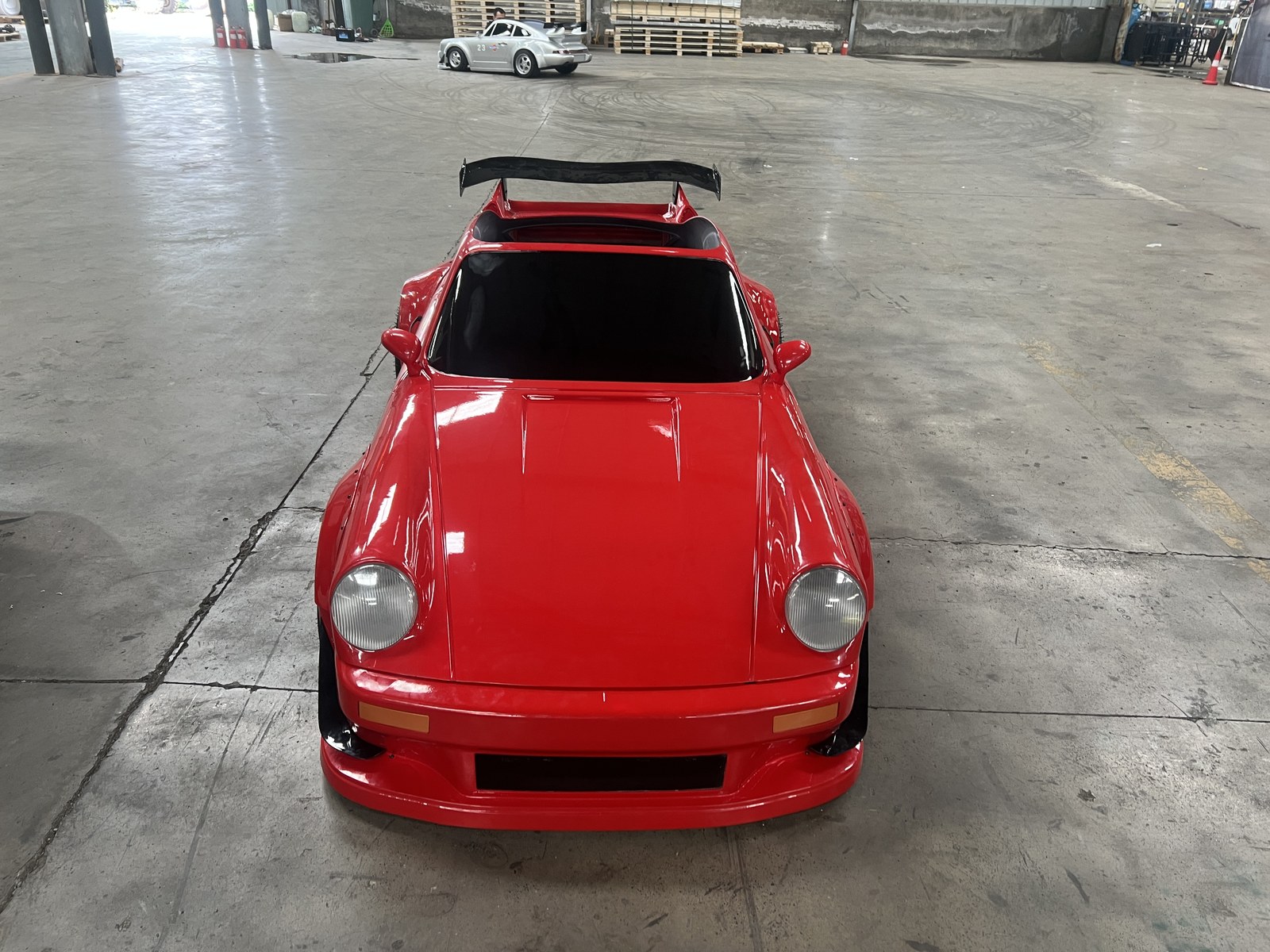
Then compare go kart noise levels before and after the swap, at the same three positions. The full kart range covers drift-ready and wide-body options, and the right body style changes how much tire scrub a driver generates in the first place.
Noise is a design input, not a complaint to manage later. Measure at three positions, log the peaks, and read the lease clause before the fleet arrives. Then spend on the fix that buys the most decibels for the least money.
If you are planning a fleet for a hall with tight limits, send our team the boundary distance and session length. We will tell you which platform fits, and which one will spend the season fighting your lease.