
An indoor karting membership is the cheapest capacity you will ever sell. Your building is already leased, your lights are already on, and a marshal is already on shift at 2 p.m. on a Tuesday. That empty slot costs you exactly what a sold-out Saturday night costs.
Most venues launch a membership card after one slow winter, sell it as a discount, and let it die by spring. The reason is simple: the members only showed up on nights they would have paid full price anyway. An indoor karting membership that pays for itself is a demand-shifting tool, not a loyalty badge.
What an Indoor Karting Membership Really Sells
It does not sell laps. It sells a standing reservation on a customer’s calendar. That distinction changes everything about how you price, staff and market the program.
A walk-in buys an experience and compares you to a cinema ticket, a bowling lane, a climbing wall. A member buys a habit, and habits are judged against gym memberships — convenience, predictability, and whether the place feels like theirs.
- Sell it as a discount and you compete on price forever.
- Sell it as a booking right and you compete on access, which only you can give.
That is why the strongest programs in the category are built around reserved slots on the calendar rather than a percentage off. Members book the same Tuesday 7 p.m. heat every week, and your schedule fills itself.

Why Weekday Capacity Is Your Real Problem
Every indoor track has two businesses inside it. Weekend evenings sell out weeks ahead and carry your fixed costs. Weekday afternoons and early evenings run at a fraction of that, and they are where your margin quietly disappears.
An indoor karting membership works on the second business, and the math is unforgiving because the cost base does not flex. Rent, insurance, utilities, the front desk, the marshal on the ramp — those are already spent before the first kart rolls. An extra driver on a Tuesday adds almost nothing to that total.
The math on a dead Tuesday
The table below is an illustrative model, not a benchmark. Plug in your own ticket price and session capacity before you draw conclusions.
| Line item | No program | 20 active members |
|---|---|---|
| Weekday heats sold per month | 40 | 40 + 60 member heats |
| Average spend per driver | 30 | 22 (member rate) |
| Weekday revenue | 1,200 | 2,200 |
| Incremental staff cost | 0 | 150 |
| Incremental margin | 0 | 850 |
Read the bottom row, not the top. A 27 percent lower ticket on a heat that otherwise runs empty is not a discount. It is found money, because the alternative revenue for that slot was zero.
Pricing an Indoor Karting Membership Without Giving Away Margin
Start from the number you cannot go below: the marginal cost of one extra driver-session. Tires, brake pads, electricity, and a share of marshal time. Everything above that line is negotiable; nothing below it is.
Then build the price from the slot, not from the discount. Decide what a weekday heat must earn to be worth running, divide by the members you need to fill it, and add a booking fee on top so the upfront cash covers your slowest month.
Three tiers that cover different cost bases
- Weekday Commuter. Off-peak only, one reserved heat per week, billed monthly. This is your volume tier and the one that fixes the Tuesday problem.
- Flex Member. Two heats a week with 48-hour booking priority and one guest pass a month. Priced roughly double the entry tier so it reads as a different product, not a bigger discount.
- Fleet or League Pass. Sold to a group — a company, a family, a club — that books the same block every week and brings their own spectators. Highest retention, lowest admin cost per head.
Keep the ladder short. Three tiers are enough. Every extra tier adds a decision at the counter, and counter decisions are where staff make the mistakes that cost you money.
Retention Mechanics That Stop the Spring Churn
Churn in an indoor karting membership is not a marketing problem, it is a scheduling problem. Members leave when a booking feels like a hassle or when the track stops feeling like a place they belong.
- Reserve the slot, not the seat. Give members a named heat time they can hold without calling. Friction at booking kills more memberships than price does.
- Publish a monthly leaderboard. Fastest lap by class, best improvement, most sessions. Recognition costs nothing and gives members a reason to come back mid-week.
- Pause, do not cancel. Offer a one-month freeze for travel, injury or exams. A paused member returns; a cancelled one rarely does.
- Track attendance, not signups. A member who has not booked in 21 days is a refund request in progress. Call them before they email you.
One more rule: never let a member’s heat be the one you bump for a birthday party. The party pays once. The member pays every month, and they will tell the group chat exactly what happened.
Which Karts Fit a Membership Fleet
Indoor karting membership economics reward durability over peak performance. A rented heat that ends early because a kart is in the pits costs you the slot, the goodwill and the refund — and a shared fleet has no spare capacity to absorb it.
That is why fleets built for repeat weekly use favor sealed electric drivetrains with fewer wear items. Our commercial kart range is built around that idea, and two chassis carry most rental programs:
- P964 cabrio — 2,500 W mid-mounted motor, 72 V 50 Ah pack, 80 km/h (50 mph), 60 km (37 mi) of range, 300 kg (661 lb) payload.
- GT3-style chassis — 60 km/h (37 mph), 220 kg (485 lb) curb weight, same 300 kg (661 lb) payload. The lighter option for junior and family tiers.
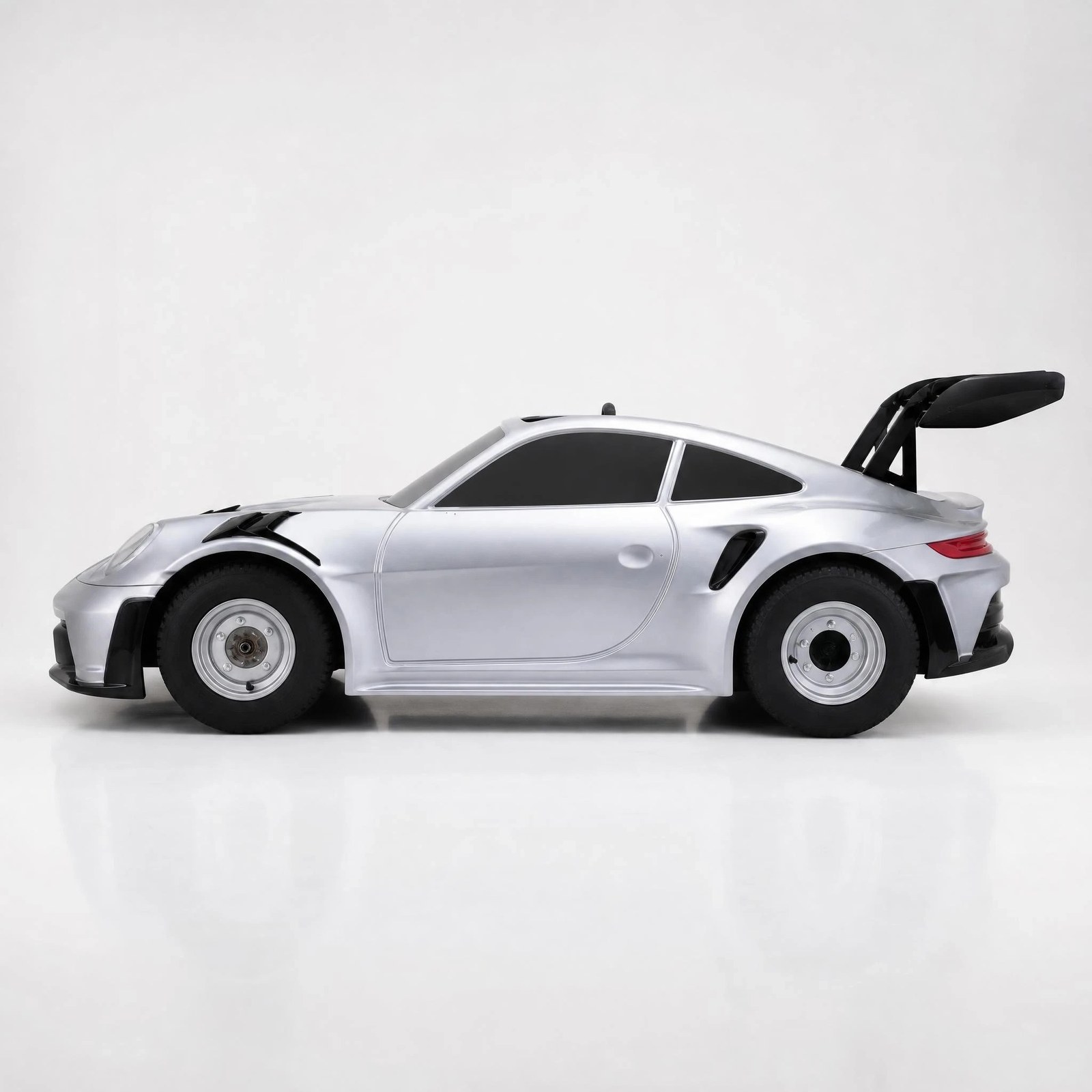
Fleet sizing, charging layout and spares planning sit on our business solutions page. One constraint worth stating plainly: these are track-use vehicles, not homologated for public roads, and they must never be presented to customers as road legal.
Launch Checklist for the First 30 Days
Do not open the indoor karting membership to your whole database on day one. Cap it, run it, and price up once a waitlist exists.
- Model the marginal cost per driver-session before you publish any price.
- Pick two quiet heats and reserve them for members only.
- Cap founding membership at whatever those two heats can seat, and no more.
- Set the booking rule in writing: how far ahead, how to change, what happens on a no-show.
- Brief the front desk on all three tiers, including the exact words for a refund request.
- Review attendance weekly, not monthly — 21 days of silence is the warning sign.
Compliance belongs in the launch, not in a later phase. In the EU, karts supplied as machinery sit under the Machinery Directive 2006/42/EC, so your documentation, guarding and warnings need to match what you actually operate. Track rules and the driver briefing stay yours regardless of what the kart’s file says.
Mistakes That Turn Members Into Refund Requests
Three failures account for most dead programs:
- Unlimited access with no reservation system, because the track cannot deliver it on a Saturday.
- A discount so deep that walk-in customers stop paying full price.
- Staff who treat members as an admin chore instead of the reason the weekday schedule exists.
There is also a quieter one: launching without a defined off-peak window. If “off-peak” means “whenever we feel slow,” members cannot plan, and planning is the product.
So treat the indoor karting membership as a scheduling contract between you and a repeat customer. Rates change, karts change, staff change — the reserved slot is the promise that keeps them renewing. For category context, the kart racing overview is a reasonable starting point, and if you import lithium packs, IATA’s dangerous goods regulations govern how they travel.
Turn Empty Tuesdays Into Recurring Revenue
You do not need a bigger building or a better Saturday. You need the heats you already own to be sold on the days nobody calls. That happens when the program is priced from marginal cost, capped at what your quiet slots can seat, and backed by a booking rule your staff can actually follow.
Start with two heats and twenty members. If the model holds on your own numbers, scale the fleet behind it — that is the order that keeps a program profitable instead of merely popular.