
Most rental venues log lap times and tire wear. Almost none log pedal travel. That gap is expensive, because kart brake maintenance is the cheapest way to protect your session count and your incident rate at the same time. A brake that fades six minutes into an eight-minute session does not simply slow a rider down. It changes how the kart behaves at the exact moment a beginner needs it to be predictable.
This guide is for track owners, fleet managers and workshop staff who service their own karts. It explains why fade appears, where kart brake maintenance fits into a normal workshop week, and which fleet numbers decide how hard your brakes have to work.
Why Kart Brake Maintenance Is a Revenue Line, Not a Chore
Brake trouble rarely arrives labelled as brake trouble. It shows up as three complaints instead: the kart “felt different”, somebody clipped a barrier at turn four, and the fleet is one unit short again. Each complaint lands in a different row of your P&L, which is why the problem survives so long.
Regulators treat braking as a pre-use item, not an annual one. The UK Health and Safety Executive guidance for fairgrounds and amusement parks expects daily checks on anything carrying passengers, and braking performance sits at the center of that routine. Read it once and your inspection sheet stops looking like paperwork.
The session math is simple enough to do on a napkin. One kart out of service for two peak sessions removes two sells you had already marketed. Multiply your per-session price by those lost sells, add the marshal time spent diagnosing it, and compare that with the twenty minutes a proper pad and fluid check takes. The check wins almost every time.
How Brake Fade Starts on a Rental Kart
Fade is a temperature story, not a mileage story. A rental kart may cover very little distance in a session while its brakes absorb far more energy than a road vehicle’s, because every lap ends with a heavy stop from near top speed and then almost no airflow while the kart queues at the pit lane.
Heat Is Usually the First Failure
When pads and rotors stay hot, the friction material gives off gas and the pad surface glazes. Pedal effort rises, braking force drops, and the rider compensates by braking earlier and harder, which adds more heat. Beginners make this worse because they brake late, then brake again to correct.
Short track layouts amplify it. If your circuit has one long straight and eight tight corners, riders use the brake as a steering aid all session long. Two hundred kilos of kart plus a rider does not need much speed to generate serious rotor temperature. Track design is part of kart brake maintenance, whether owners enjoy hearing that or not.
Moisture Quietly Lowers Your Safety Margin
Brake fluid is hygroscopic, which means it absorbs water from the air through hoses and the reservoir vent. Water lowers the boiling point sharply. Under US federal standard FMVSS 116, a DOT 4 fluid must reach 230 °C (446 °F) dry but only 155 °C (311 °F) after aging, and a rental kart’s calipers work in that second range far more often than owners expect.
Once the fluid boils, you get a soft or long pedal and sometimes no pedal at all until it cools. That is the failure riders describe as “the brakes went away”. Full details of the boiling-point test live in the eCFR text of FMVSS 116, and the numbers are worth printing for your workshop wall.
The 6-Point Kart Brake Maintenance Check
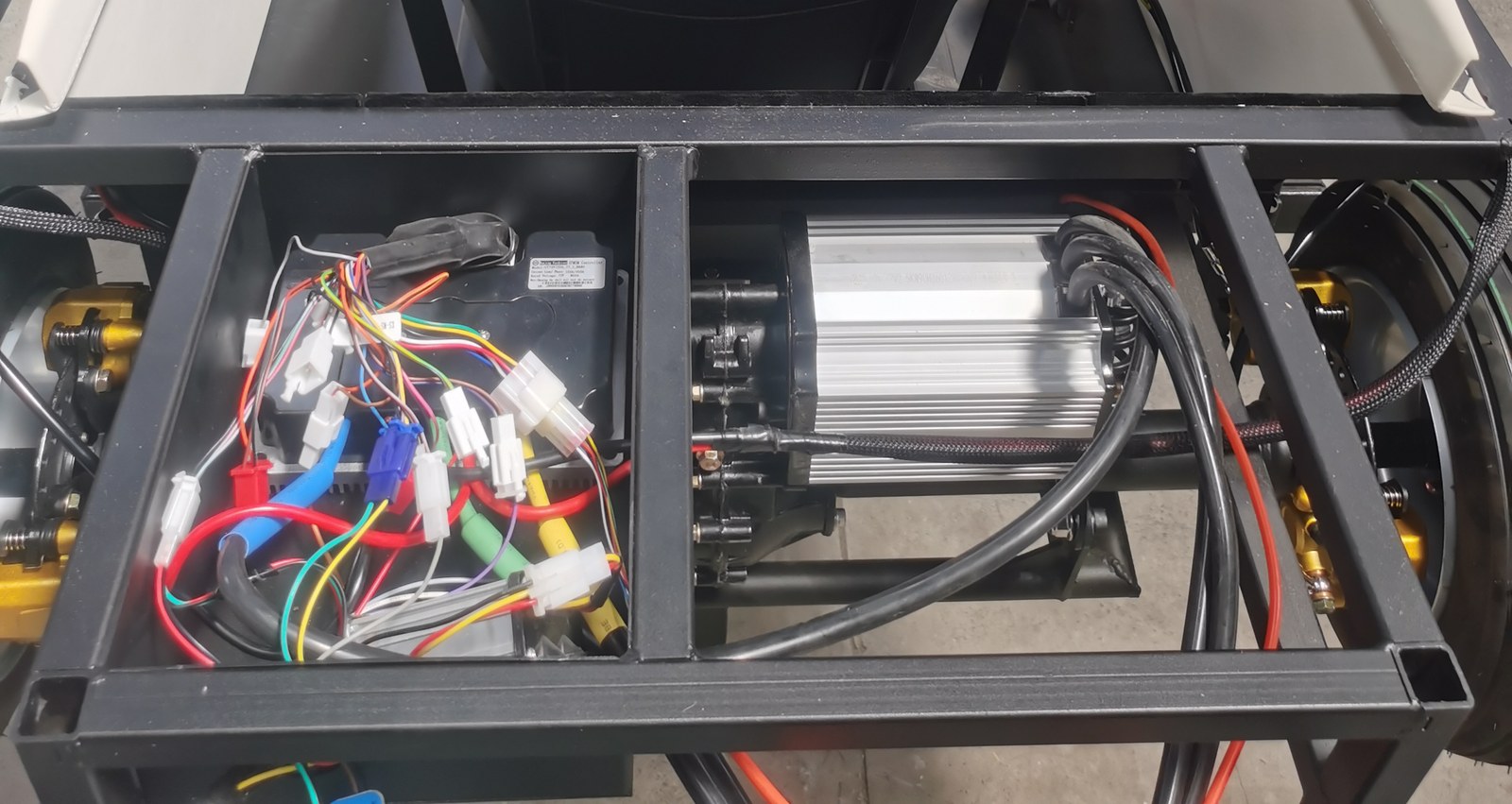
This is the working core of kart brake maintenance: once a week per kart, and again whenever a rider reports a soft pedal. It takes about twenty minutes on a lift or stands, and it needs no special tools beyond a gauge, a light and a spanner set.
| Check | How to test | Fail signal | Time |
|---|---|---|---|
| Pedal free play | Press by hand, measure travel before resistance | More than a few millimetres of slop, or a spongy feel | 1 min |
| Pad thickness | Look through the caliper window, both sides | Uneven wear, cracked friction material, backing plate close to rotor | 4 min |
| Rotor condition | Run a fingernail across the swept face, check for heat colour | Deep grooves, blue tint, visible cracks, warped pulsing | 3 min |
| Fluid level and colour | Check the reservoir against the marked line | Dark or cloudy fluid, level dropping between checks | 2 min |
| Caliper and pins | Wiggle the caliper, inspect slide pins and dust seals | Sticking caliper, torn boot, drag when the wheel is spun | 5 min |
| Axle and hub play | Rock the wheel at twelve and six o’clock | Movement at the bearing, loose hub bolts, runout at the disc | 5 min |
A written log is the difference between kart brake maintenance and brake repair. Record the result, not just the verdict. “Pads fine” tells your next mechanic nothing. “Front-left pad 4 mm, rear 3 mm, fluid amber” tells them exactly when to order parts.
What Actually Wears Out, and What Owners Blame by Mistake
Most parts bills blamed on cheap brakes are really a missing inspection. These are the components that decide how a kart brake maintenance schedule performs over a season.
Pads and Rotors
Pads wear by design, so replace them on thickness rather than on noise. Rotors wear unevenly on rental karts because riders brake in bursts and often drag the pedal through a corner. A rotor with a blue tint has been over its working temperature and should be measured, not polished.
Calipers, Pins and Seals
A sticking caliper is the most misdiagnosed fault in a rental fleet. It drags, heats the disc, cooks the fluid and makes the kart feel slow on the straight. Marshals blame the motor or the battery. Ten seconds of spinning a lifted wheel would have found it.
Fluid and Hoses
Fluid is the cheapest part on the kart and the one most often skipped. Change it on a calendar, not on a symptom, and bleed until the pedal is firm. Look for bulging or cracked hoses at the same time. A hose that fails mid-session is a barrier incident, not a workshop job.
Fleet Numbers That Decide How Hard Brakes Work
When you specify or replace karts, three published numbers tell you how much brake duty to expect: vehicle mass, top speed and rated payload. Heavier kart, higher speed, more energy per stop, and more of your week goes into kart brake maintenance.
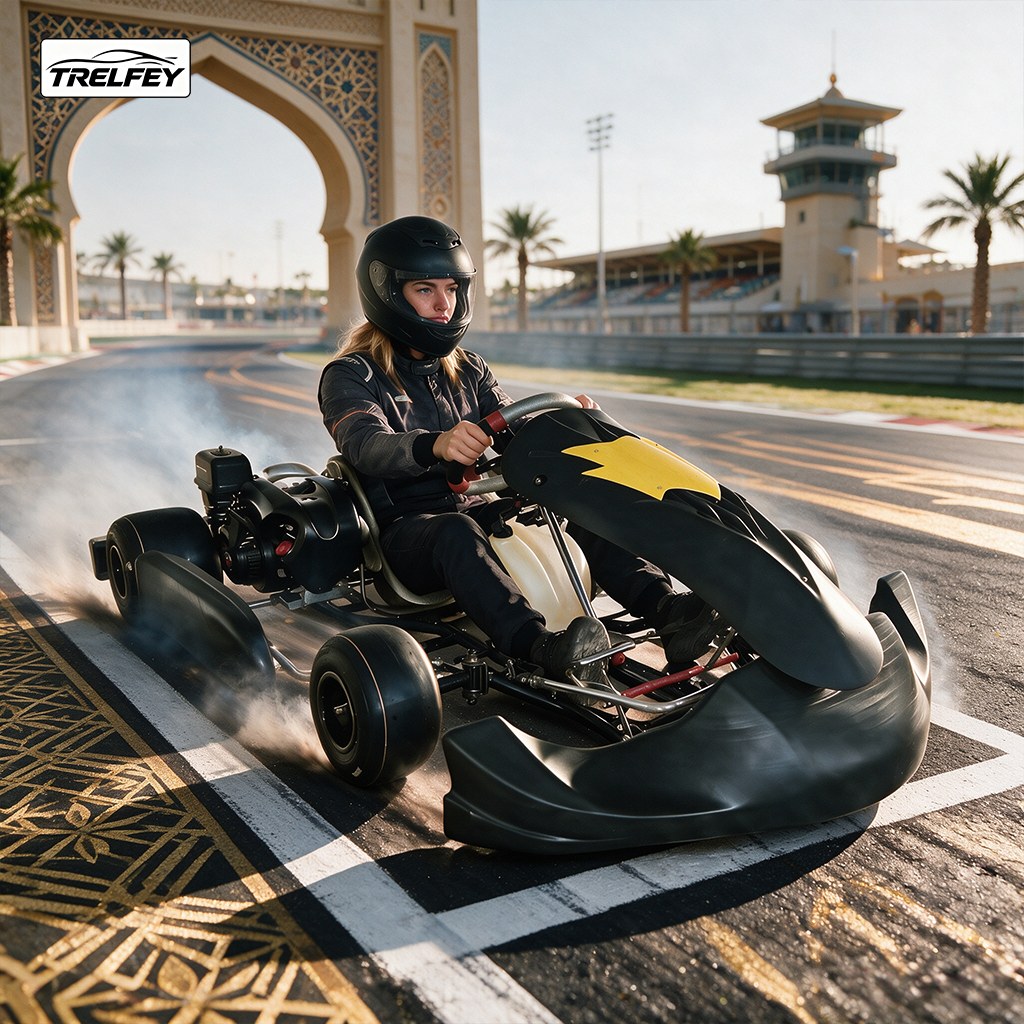
Across our commercial kart range, the 964-style and wide-body electric platforms run a 2500 W mid-mounted motor, a 72 V 50 Ah pack, a top speed of 80 km/h (50 mph), roughly 60 km (37 mi) of range and a 300 kg (661 lb) load rating. The GT3-style kart is lighter and slower on purpose, at 60 km/h (37 mph), 220 kg (485 lb) kerb weight and the same 300 kg (661 lb) payload. Lighter and slower means cooler brakes and longer pad life, which is often the right answer for a beginner-heavy venue.
Our four-stroke rental kart suits venues that still run petrol, and the wide-body platform gives workshop staff room to reach the rear axle without dismantling bodywork. If you are comparing layouts, the business solutions pages set out fleet sizing and site planning, and support covers spare parts and service questions.
Build a One-Page Brake Log
A clipboard beats a spreadsheet that nobody opens. Keep one page per kart, one row per week, and five columns. This sheet is the memory of your kart brake maintenance program:
- Kart number and date checked
- Pad thickness, front and rear, in millimetres
- Fluid level and colour
- Pedal feel: firm, long or spongy
- Initials of the person who signed it
After a month you will see which karts eat pads and which corners cause it. That is when maintenance stops being reactive and starts being a schedule.
Fix the Track, Not Just the Kart
Half of your brake wear is a driving problem, and driving problems are cheaper to fix than hardware. Kart brake maintenance only works when the briefing matches the workshop.
Lengthen the braking zone on your fastest approach so riders brake earlier and lighter. Add a cool-down lap to the briefing, and enforce it, because a hot kart parked immediately loses more pad life than one that rolls for sixty seconds.
Coaching matters too. Tell beginners to brake in a straight line, release before turn-in, and stop sawing at the pedal mid-corner. The FIA Karting technical and sporting documentation is written for competition, but its language on braking stability is a useful reference when you brief staff.
Start With One Kart This Week
Pick the kart that generated the most complaints last month. Run the six checks, write the numbers down, and bleed the fluid if it is more than a season old. Then do the same kart again in seven days and compare.
That single comparison will tell you more about your fleet than any dashboard. Kart brake maintenance is not glamorous work, and it will never trend on social media. It does keep karts on track, riders confident and sessions sold, which is the whole business.