
An eight-minute session with a five-minute turnaround is a 13-minute cycle. Twelve karts at that cycle deliver four full rounds an hour, or 48 paid rides. Karting turnaround time is where the other 24 rides went.
Cut the pit stop to two minutes and the same karts, same track and same staff produce six rounds — 72 rides. Nothing was bought, rebuilt or hired. Most operators try to close that gap by ordering more karts, which is the expensive answer to what is actually a scheduling problem.
Why karting turnaround time beats fleet size
The session and the turnaround share one clock, which is why the arithmetic is so unforgiving. A kart earns money only while someone is driving it. The rest of the cycle it is a parked object with a member of staff attached to it.
At eight minutes of driving and five minutes in the pit, the kart is earning 8 of every 13 minutes — 62 percent of the clock. At two minutes it earns 8 of 10, or 80 percent. The kart did not change. The duty cycle did.
To match a two-minute pit with a five-minute one, you would need 18 karts on the same track instead of 12. Six extra karts, six extra seats to belt, six more units to charge, insure and store — all to buy back time that a stopwatch and a painted line could have recovered for nothing.
| Turnaround | Cycle with an 8-min session | Full cycles per hour | Rides per hour on 12 karts | Against a 2-min pit |
|---|---|---|---|---|
| 5 minutes | 13 min | 4 | 48 | -33% |
| 4 minutes | 12 min | 5 | 60 | -17% |
| 3 minutes | 11 min | 5 | 60 | -17% |
| 2 minutes | 10 min | 6 | 72 | baseline |
Read the middle two rows carefully, because they hide the reason so many pit improvements fail. Going from five minutes to four buys you nothing: a 13-minute cycle and a 12-minute cycle both fit five times into an hour. Going from four minutes to three buys nothing either.
One minute of improvement is invisible until you cross a cycle boundary, and then it lands all at once. That is why partial fixes feel like they did not work. You remove a step, save forty seconds, and the ride count does not move. Aim for the boundary — under 10 minutes, then under 8 — rather than for “a bit faster”.
The two-minute pit: five jobs, 120 seconds
Two minutes is not a slogan. It is a budget you can hand to staff, split into five jobs with a number of seconds against each one. If a job overruns, the loader knows within ten seconds instead of discovering it at the end of the hour.
- Unload and clear, 25 seconds. Belt release, hands off the wheel, walk to the exit gate, gate shut behind the last rider.
- Kart reset, 20 seconds. Steering centred, seat back, key or kill switch returned, footwell clear of debris, tyres glanced at.
- Load and belt, 45 seconds. The longest job and the one that decides the cycle. Seat position first, then the belt, then a pull test by the loader rather than by the rider.
- Gate reminder, 20 seconds. One sentence about braking points and contact, delivered at the gate by the same person every time.
- Release, 10 seconds. The marshal confirms the track is clear, the gate opens, the first kart rolls.
That adds to 120 seconds with nothing left over, which is deliberate. A budget with slack in it becomes a three-minute pit within a month, and nobody can tell you which job absorbed the extra sixty seconds.
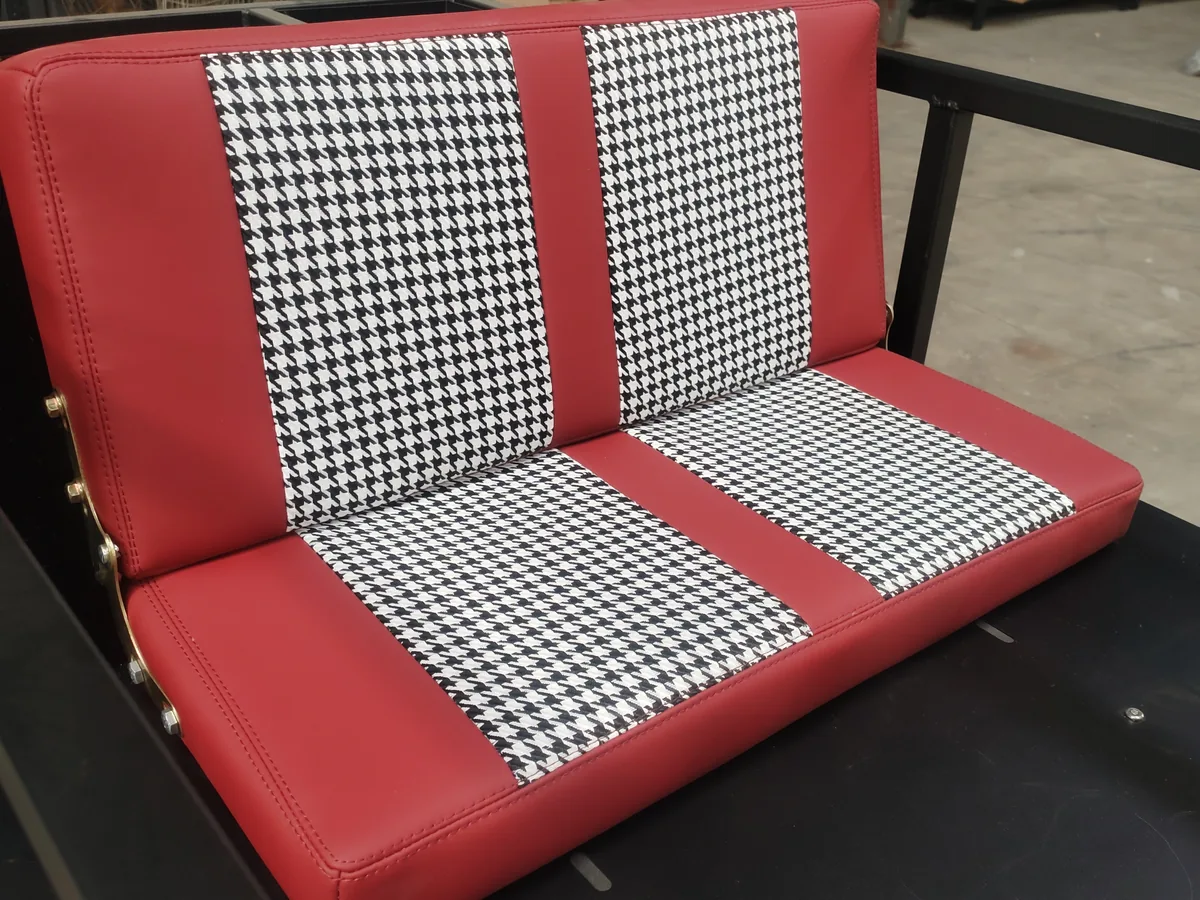
The full safety briefing does not belong in this window. It happens while the previous group is still on track, so the turnaround contains checks rather than explanations. Regulators treat that split as basic: HSE’s guidance for employers of ride controllers expects staff to be trained to load the ride, to confirm that restraint and containment systems are correctly fitted before it starts, and to keep gates and danger areas clear while it moves. Those are exactly the jobs above, executed under time pressure.
Build the pit as two lanes, not one gate
Most queues at a kart track are not caused by slow staff. They are caused by two streams of people sharing one opening. Riders leaving cross riders arriving, and both cross the loader.
Give the pit an in-gate and an out-gate. Six metres of depth is enough to park a row nose-out at an angle, so a rider walks straight to the seat instead of climbing over a wheel. Put the loader on the belt side of the row, and the marshal at the exit, where the release decision is made and nobody is also holding a buckle.
Then set the call rule: the next group is called when the third-from-last kart is belted, not when the last one leaves. Calling early is free. Calling late costs a whole cycle, every cycle, until you staff up. IAAPA’s operator resources for family entertainment centres put layout, queue management and staff training in the same bracket for that reason — they are one system, not three separate improvements.
What kart design does to karting turnaround time
You cannot train your way out of a badly shaped cockpit. Three details decide whether two minutes is achievable or theoretical, and all three are decided at the specification stage, long before anyone holds a stopwatch.
Ingress height and seat adjustment. A seat that needs a spanner turns every rider change into a maintenance task. A cockpit with no brace across the leg opening lets an adult sit down and swing both legs in with one movement.
Restraint hardware. A single-buckle lap belt closes in seconds and is verified with one pull. Four loose straps with no fixed anchor take three times as long and are fitted slightly differently by every member of staff on the rota.
Bodywork that tolerates contact. Pit lanes are where karts touch. A front impact bumper that absorbs a nudge at walking pace keeps a unit in service; a fairing that cracks sends it to the workshop for a morning and takes a sixth of a twelve-kart fleet out of the peak.
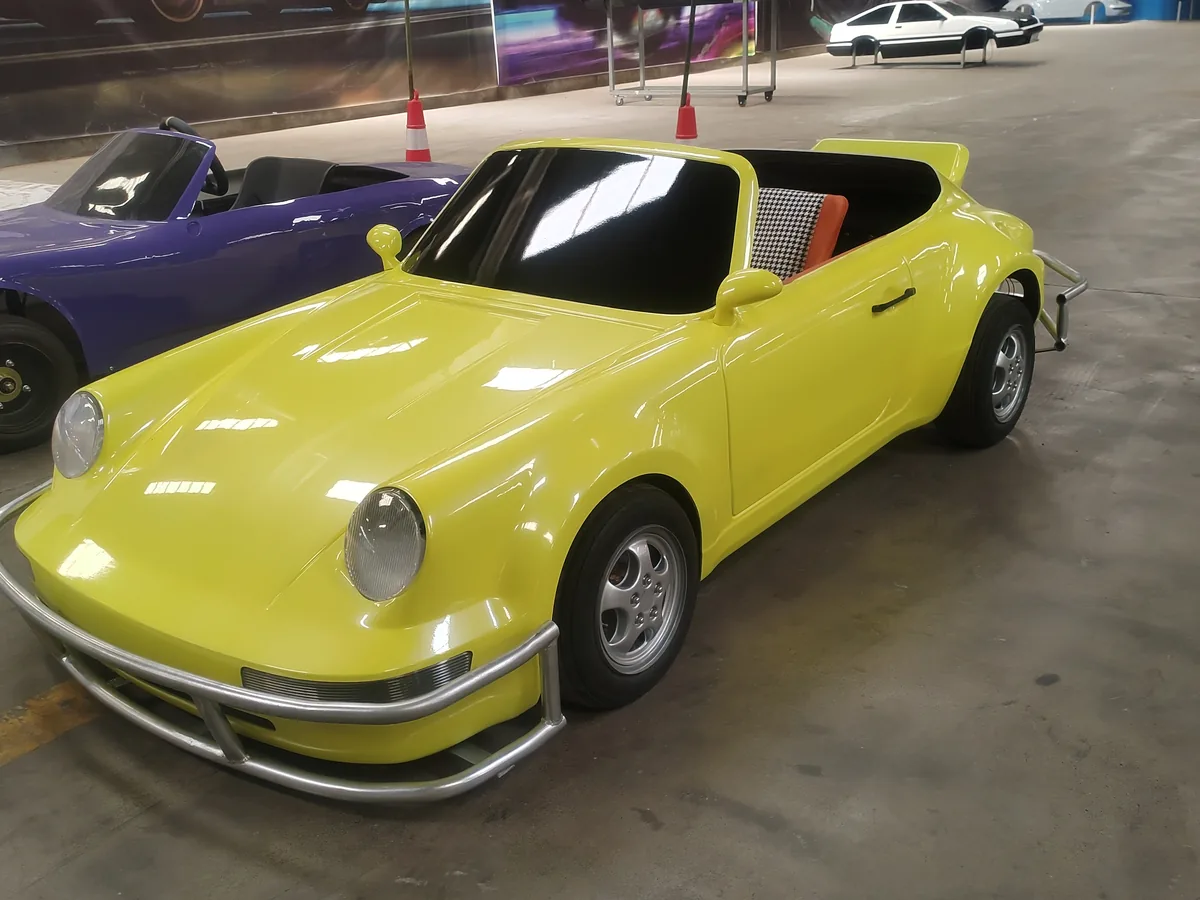
None of this is exotic. The GT3 RS style kart is specified at 2500 W, 60 km/h and a 72 V 50 Ah pack for venues where the fast lane is limited by the pit rather than by the machine. The F40 single-seat sits at the other end at 800 W and 30 km/h, and it earns its place in the novice lane — a grid of evenly matched karts produces fewer mid-session stoppages, which is a turnaround gain you never have to staff.
Three mistakes that cost a full cycle
Briefing inside the turnaround. A ninety-second talk does not fit a 120-second budget, so either the pit runs late or the checks get skipped. Move the briefing to the queue and keep one sentence at the gate.
One gate for two directions. Every near-collision between an exiting rider and an arriving one costs five to ten seconds, and there are twelve of them per cycle. Two gates is the cheapest capital item on the site.
Buying karts to cover a slow pit. The expensive one. At a 13-minute cycle, six extra karts deliver the same hourly capacity as a three-minute improvement in the pit — and they keep costing money every year after the invoice. Fix the process, then size the fleet.
Measure it with a stopwatch for one week
You do not need a timing system for this. Stand at the pit exit with a phone stopwatch and time ten consecutive cycles: last kart of one group crossing the line, to first kart of the next. Write the number down, not the impression.
Then time the five jobs separately for one session. The result has the same shape almost every time: four jobs inside budget and one eating forty seconds that nobody had accounted for. Fix that one and re-time the cycle, then check whether it crossed a whole-minute boundary. If it did not, you have bought nothing yet.
Do this before you order anything. The fleet sizing maths behind a two-minute karting turnaround time assumes a cycle length, and if that assumption is a five-minute pit, the fleet it produces is a third too large. The build budget has a line for every kart bought to cover a process problem, and that line is the one operators regret.
FAQ
What is a realistic karting turnaround time?
Two to three minutes on a well-staffed outdoor circuit running twelve karts with a load-and-belt routine. Under two minutes is achievable with two gates and a loader for every four karts, but the margin for a rider who needs help with a belt disappears.
Is a shorter session better than a faster turnaround?
Sometimes. A six-minute session with a two-minute pit gives a 7.5-cycle hour, so seven full cycles — 84 rides instead of 72. But the first two minutes of a drift session are spent learning the kart, so a six-minute run reads as a sample rather than an experience. Shorten the session at peak only.
How many staff does a two-minute pit need?
For twelve karts, one loader per four karts on the belt side, plus a marshal at the exit gate who owns the release. That is four people in the pit during a changeover, which is more than most tracks schedule on a Saturday.
Can we skip the full briefing to protect the cycle?
No. HSE’s guidance for ride controllers expects riders to be briefed and restraints verified before the ride starts, and the briefing belongs before pit entry, not inside the changeover. Compressing it to save ninety seconds inverts the priority: you are trading a documented safety step for throughput.
Send us your pit layout, your session length and the cycle time you measured this week, and we will come back with a two-lane pit sketch and the fleet configuration that matches it. Start with the quote request.