A 72 V 50 Ah lithium pack holds 3.6 kWh — volts times amp-hours, nothing more mysterious than that. Charged from empty at the EU non-household average of €0.1837 per kWh, it costs about 66 cents to fill. The petrol alternative on the same circuit carries seven litres, and seven litres costs whatever your pump charges.
That gap is real, and it is also the least interesting number in the electric vs petrol go-kart decision. Energy is roughly a tenth of what a rental kart costs you across three years. The other nine tenths sit in duty cycle, weight, ventilation, spare packs and the afternoon the battery reaches end of life.
What an electric vs petrol go-kart comparison has to include
Most quotes you receive compare a purchase price with a purchase price. That tells you which invoice is larger today and nothing about which fleet you can afford to keep. Five lines decide it, and only the first one is easy to price.
- Energy per operating hour. Price it per hour of track time, not per tank or per charge, because a tank and a pack do not cover the same number of sessions.
- Drivetrain service. Petrol carries oil, plug, air filter, chain and clutch. Electric drops all five and adds two items nobody quotes for: controller replacement and pack degradation.
- Consumables that follow weight. Tyres, bushes and brake discs wear on a clock set by mass, not by drivetrain.
- Infrastructure. A charger bay and a supply upgrade on one side; fuel storage, extraction and carbon monoxide control on the other.
- Downtime. A kart off the circuit for a chain or a pack is a seat you still pay rent on.
Two public sources make the first line easy to price properly. Eurostat’s electricity price statistics track non-household prices twice a year: the EU average was €0.1837 per kWh in the second half of 2025, with Ireland at €0.2552 and Finland at €0.0748. The same fleet can carry a 3.4× different energy bill depending on which country you build in, which is more variation than most drivetrain choices produce. The US Department of Energy’s Alternative Fuels Data Center applies the same discipline to vehicles: cost per unit of energy, not cost per fill.
The three-year table, line by line
The two karts below are the two ends of the range we build, so the comparison is honest rather than flattering. Read the electric vs petrol go-kart table with your own tariff and pump price in hand — every row is arithmetic you can redo in ten minutes. Where a figure depends on your market, it is marked as an assumption to replace with your own number.
| Cost line | Electric — GT3 RS Style | Petrol — ZS225-V | What actually decides it |
|---|---|---|---|
| Cost to fill | 3.6 kWh, about €0.66 at the EU average | 7 L, about €11.90 at €1.70 a litre | Your tariff against your pump price |
| Energy per running hour | €0.66 if a pack lasts one hour | €4.76 at 2.5 hours per tank | Session length and how hard riders push |
| Curb weight | 200 kg | 88 kg | Tyre and bush wear over three seasons |
| Drivetrain service | Motor and controller; no oil, plug, chain or clutch | Oil, plug, filter, chain, clutch, recoil starter | Hours run, not months owned |
| Site infrastructure | Charger bay plus supply capacity | Fuel storage, extraction, CO monitoring | What your building already has |
| Turnaround impact | Swap a pack, or wait on the charger | Three to five minutes with a jerry can | Length of your session block |
| Indoor suitability | No exhaust at the vehicle | Requires a ventilation assessment | Your regulator, not your supplier |
Run the energy line on one kart doing 1,500 running hours over three years, which is roughly ten hours a week. Petrol spends about €7,140 on fuel. Electric spends about €990, and that already assumes the pessimistic case of one hour per charge. Across a ten-kart fleet the difference is north of €60,000 — enough to pay for a serious charging installation, and not enough to make the decision on its own.
Where petrol still wins
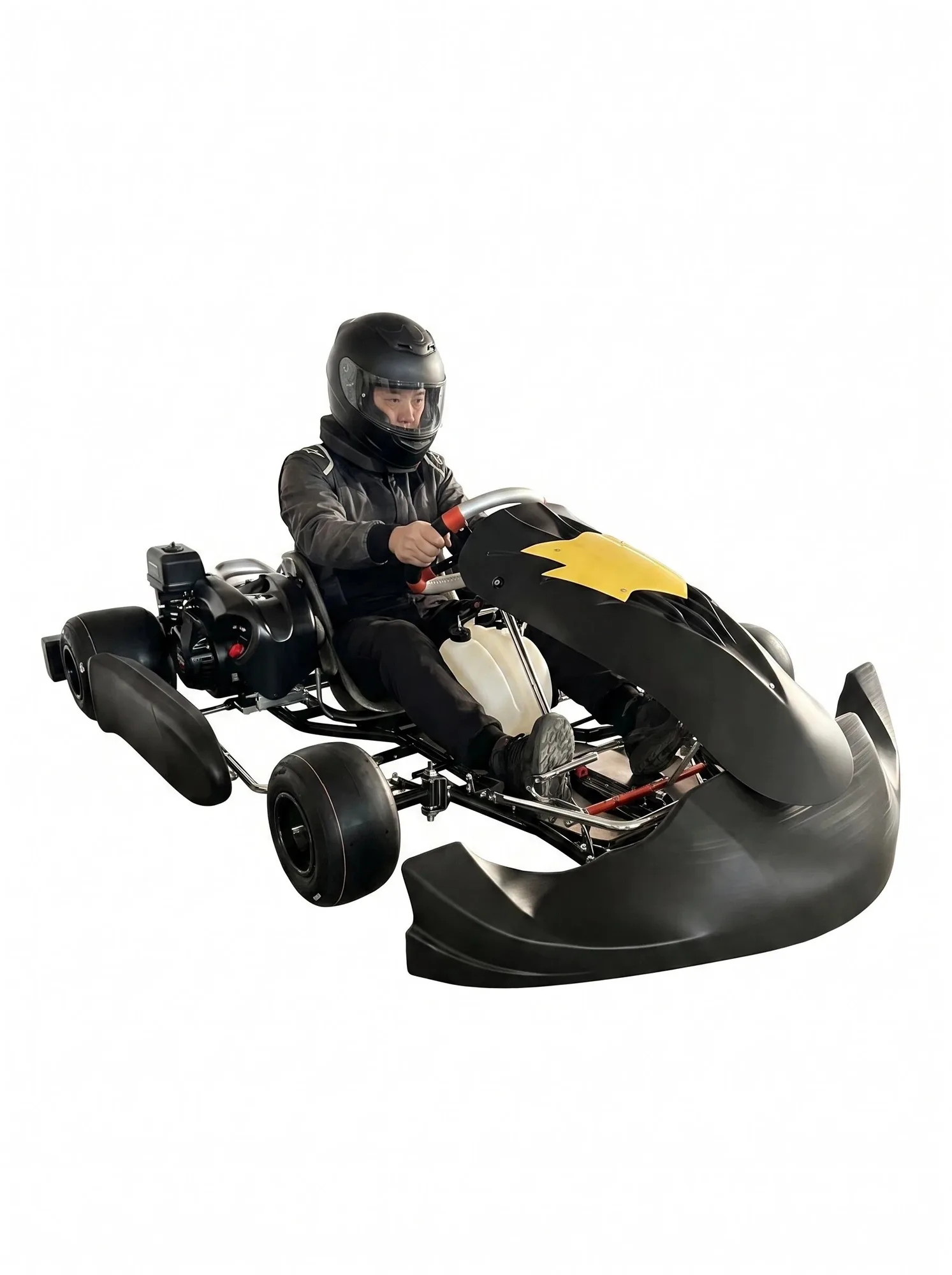
Outdoor circuits with long straights and no spare electrical capacity should buy petrol without apologising for it. Seven litres gives two to three hours of continuous driving on the ZS225-V, which is a full evening of short sessions before anyone lifts a jerry can, and a 225 cc four-stroke can be serviced by any small-engine workshop within reach of your gate.
There is also the part suppliers are shy about. Some of your customers pay specifically for noise and smell, and an outdoor circuit that sounds like a circuit sells a different afternoon from one that hums. If your marketing leans on atmosphere, petrol is not a compromise; it is the product.
Indoors, though, the argument ends. HSE guidance on vehicle exhaust emissions is direct about extraction and ventilation, and explicit that you should not rely on catalytic converters to run engines safely indoors — they are least effective when engines run cold or intermittently, which is precisely the duty cycle of a rental kart. Track length matters too: an eight-minute session on a tight indoor loop never gets a 225 cc engine warm enough to be efficient, and you will be servicing plugs on a schedule your outdoor neighbours never see.
Where electric wins, and where it quietly loses
The electric vs petrol go-kart argument changes character the moment the circuit moves indoors. Electric wins on running cost and on permissions. The energy arithmetic above runs about seven to one in its favour even under a deliberately unkind assumption about pack life, and the absence of exhaust moves the venue question from can we ventilate this to can we power this — a much easier conversation with a landlord, a fire officer and the residents above a retail unit.
Then the quiet losses. The pack is the largest single future bill on the fleet, and it arrives as one line rather than as monthly servicing, which is why operators notice it. Charging has to fit inside your session block or you need a second pack per kart, and a second pack per kart changes the capital number you compared in the first place. And a 200 kg kart loads tyres, bushes and barrier contact differently from an 88 kg one, so the consumables line is not a copy of the petrol column — it is its own schedule.
Three mistakes that wreck the comparison
None of the three below are engineering problems. They are arithmetic done in the wrong order, and each one survives right up to the week you open.
1. Comparing one pack with one tank and stopping there
A pack and a tank are not equivalent units. One is refilled in minutes with a can, the other in hours on a charger, so the honest unit is cost per running hour with your session block applied. Operators who skip that step buy eight electric karts, then discover they need sixteen packs to run a Saturday.
2. Ordering karts before the supply is quoted
The electrical capacity of a leased unit is the slowest item in the whole project and the one most often assumed. Get the supply figure before the fleet figure. If the upgrade lands after the karts arrive, you own a very expensive static display for six weeks.
3. Counting sessions per hour without counting swap time
An eight-minute session with a two-minute turnaround is six sessions an hour. Add four minutes for a pack change with no spare and you are at four. That single number moves revenue more than the drivetrain choice does, and it is decided by how many packs you buy, not by which motor you pick.
Matching the drivetrain to the site you actually have
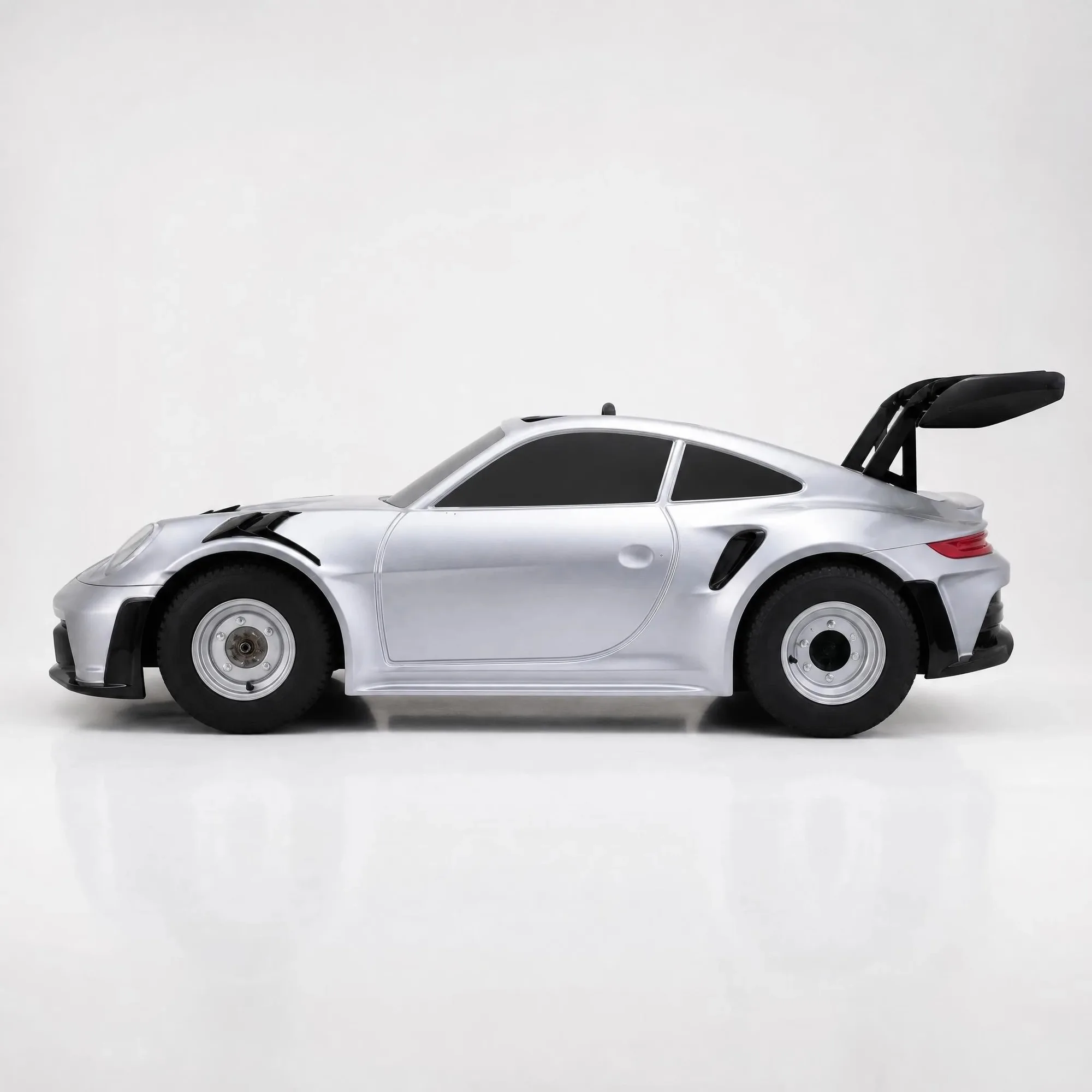
If the hall is yours and the session block is tight, the GT3 RS Style is the electric end to cost first: 72 V 50 Ah, 60 km/h, 200 kg, standard charger with fast charging as an option. If the circuit is outdoors and the supply is already committed elsewhere, the ZS225-V petrol kart puts the capital into the track instead — 225 cc, 9.5 hp, 85 km/h, 88 kg, two to three hours on seven litres. Neither suits a 200 m indoor loop with a thirty-minute queue; that site needs more karts, not a different motor.
Budgets for the surrounding build sit in our breakdown of what it costs to open a go-kart track, and the demand-side maths behind fleet size belongs in the same spreadsheet. More operator notes are filed in the insights archive.
FAQ
Is an electric go-kart cheaper to run than a petrol one?
On energy, clearly yes — roughly a seventh of the fuel cost per running hour at EU non-household tariffs. On total cost of ownership the electric vs petrol go-kart answer depends on pack life and charging capacity. Ask for a cycle count and a capacity guarantee in writing, then compare that figure with three years of fuel and engine servicing.
How long does an electric kart run on one charge?
That depends on the pack and the duty cycle, not on the motor rating. A 72 V 50 Ah pack stores 3.6 kWh; how many sessions that covers is a function of rider weight, track grip and how much time is spent at full throttle. Ask any supplier for measured amp-hours drawn per session on a circuit like yours, and size the pack count from that number.
Can you run petrol karts indoors?
Only with a documented ventilation and extraction assessment. Carbon monoxide from a cold or intermittently run engine reaches harmful concentrations quickly, and catalytic converters do not make an indoor engine safe. Many insurers will ask for your extraction design before they quote, so treat it as a capital line rather than a paperwork item.
Which holds its value better after three years?
Petrol is easier to sell because a buyer can hear the engine and judge it. Electric resale follows pack health, so the fleet with logged charging cycles and a capacity test sells faster than the one without records. Keep the log from day one; it is worth more at resale than any specification sheet.
Send us your circuit length, session length and whether the hall is heated, and we will come back with a drivetrain recommendation and a three-year consumables plan you can put in front of your bank — request a quote.